Intersec Dubai 2026 Amplifying human capabilities with AI plays a crucial role in sectors vital to the Middle East’s regional economy, such as oil and gas and healthcare. At Intersec Dubai, Motorola Solutions will showcase how its latest AI innovations empower human decision-makers to move from
Transport / Traffic
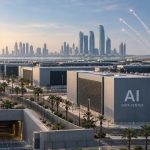
Interview: Nikola Stanišić, Head of Sales, Mercury.AI New camera factory will create more than 700 new jobs for engineers, technicians, and highly qualified workers. In doing so, the company is positioning Southeast Europe as a serious player in the global video surveillance and security technology market. By: Damir Muharemovic editorial@asmideast.com a&s Middle East:
The global access control and residential security market, projected to exceed USD 25 billion by the mid-2030s, is driven by rapid urbanization, smart city initiatives, and rising expectations for connected living. As residential developments grow in scale and complexity, security is no longer viewed as a collection of independent systems. Integration, automation, and
Dubai’s Roads and Transport Authority has begun deploying drone technology to inspect the operational efficiency of metro tunnels, strengthening safety standards while improving maintenance efficiency across the rail network. The initiative reduces the need for manual inspections in confined and high-risk environments, significantly limiting staff exposure to potential
Dubai’s Roads and Transport Authority (RTA) has launched a pilot operation to clean traffic signals across Dubai using drone technology. This innovative step reflects RTA’s commitment to adopting advanced technologies within operational processes and deploying smart solutions that align with a future-focused vision to enhance service quality, optimise resource efficiency,
As the Middle East undergoes rapid urban expansion, its security needs are evolving just as fast. Distributors are no longer simple intermediaries but strategic technology orchestrators shaping integrated, compliant, and resilient systems. Their role now spans design, enablement, and lifecycle support across diverse environments. This feature explores how industry leaders
AI, CT, and connected screening ecosystems are redefining the security lane. With automated detection, modular architectures, predictive maintenance, and biometric-linked passenger journeys, airport X-ray scanners are evolving into intelligent platforms that reshape how airports manage risk, efficiency, and compliance. By: Mirza Bahic; E-mail: mirza.bahic@asmideast.com For
When Qatar unveiled its National Vision 2030, the message was unambiguous: the country’s hydrocarbon windfall would not last forever, and it intended to be ready. Fifteen years later, that vision has translated into one of the most ambitious infrastructure buildouts in the Gulf. With it, a security and safety market that has quietly become essential […]
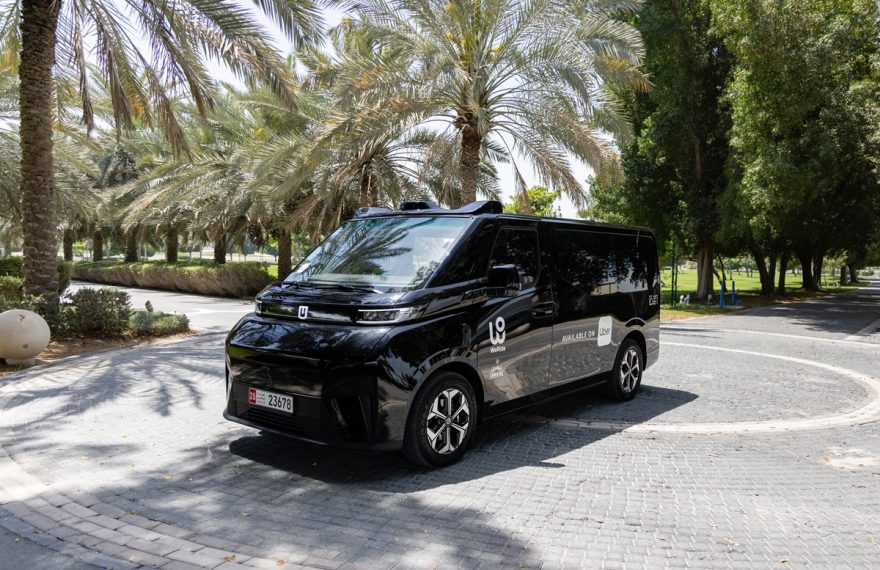
Source: WAM The Integrated Transport Centre (ITC), an affiliate of the Department of Municipalities and Transport and under the supervision of the Smart and Autonomous Systems Council (SASC), announced the development of the Abu Dhabi Autonomous Vehicle (AV) Test Hub, the first of its kind in the Middle East and North Africa. The project is […]
TII–GCAA simulations, facilitated by ASPIRE, are supporting the development of one of the world’s first airspace rule frameworks for safe autonomous flight operations. The Technology Innovation Institute (TII) and ASPIRE, both subsidiaries of the Advanced Technology Research Council, in collaboration with the General Civil Aviation Authority (GCAA), are helping to position