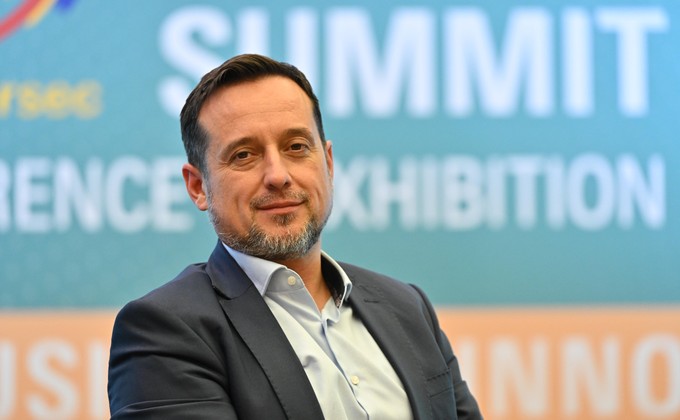
Artificial intelligence is already reshaping security operations, but technology alone cannot make organizations safer. Mahir Hodžić, owner of Global Security and chairman of the Adria and Bulgarian Security Summits, discusses where AI brings real value, why human accountability must remain
Najave
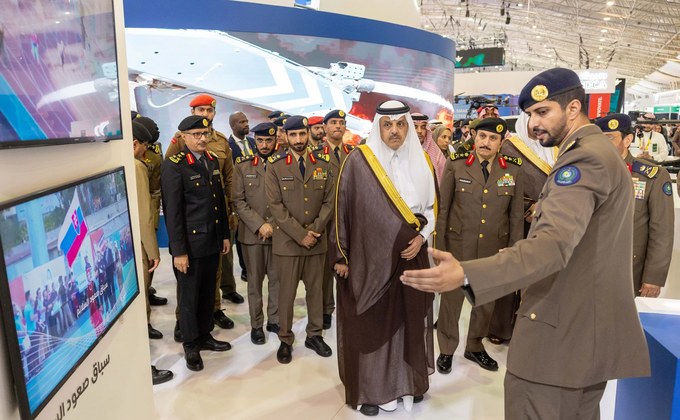
Intersec Saudi Arabia will take place from 16-18 November 2026 at Riyadh Front Exhibition & Conference Center, with over 25,000 visitors and more than 500 exhibitors expected. The Kingdom’s leading platform for security, safety and fire protection returns from 16–18 November 2026 at Riyadh Front Exhibition & Conference Center (RFECC), increasing exhibition space by
Critical infrastructure operators can no longer treat drones as isolated nuisance devices. As small, low-flying, autonomous, and non-emitting drones become harder to detect and classify, counter-drone protection is moving toward layered airspace awareness, multi-sensor fusion, and carefully controlled mitigation. By: Mirza Bahic E-mail: editorial@asmideast.com
Stricter smoke detection requirements are pushing the industry beyond minimum product compliance toward demonstrable performance across the entire system. In the Middle East, where UL, EN and local requirements frequently coexist, the real challenge lies in translating new standards into better design, carefully validated retrofits and lower lifecycle risk. By: Mirza
The security and safety market in Oman is steadily maturing. Security is no longer viewed simply as a procurement category or a compliance requirement. It is increasingly becoming an operational capability embedded within critical infrastructure, public services and commercial development By: Roman Ivanković E-mail: editorial@asmideast.com Oman’s security market is
Smart locks in the residential sector have come a long way from being a practical but non-essential add-on to becoming an operational tool from which users now rightly expect a great deal. As market adoption accelerates, the focus has moved beyond convenience toward advanced control, reliability, and system-level performance. By: Mirza Bahic;
Kuwait’s security market is entering a new phase of development. Driven by Vision 2035, large-scale infrastructure projects, and ongoing modernization efforts across both the public and private sectors, the country is creating new opportunities for security technology providers across multiple verticals. By: Roman Ivankovic; E-mail: editorial@asmideast.com Unlike
Physical Security Information Management (PSIM) platforms are no longer evaluated by the number of systems they can connect. Instead, the focus is on their ability to reliably transform fragmented infrastructure into an integrated operational environment. As PSIM matures through real-world deployments, interoperability is defined less by connectivity and more by data
Walk into any house of worship in the Middle East, and the acoustic challenge is immediate. Domed interiors and marble prayer halls were built for awe, not intelligibility. The best PAVA deployments operate invisibly, delivering clarity under normal conditions and reliability when it matters most. By: Fatima Al Husseiny; E-mail: editorial@asmideast.com The Middle East’s
As regional uncertainty persists, Gulf security operators are responding not with reactive procurement but with deliberate investment in integrated platforms, AI-driven analytics, and operational resilience, building systems designed to perform under pressure, not just respond to it. By: Roman Ivanković; E-mail: editorial@asmideast.com The Gulf security market has long