TII Launches Falcon Perception to Advance Real-World Multimodal AI
The Abu Dhabi research institute says its new Falcon Perception model is built to help machines see, read, and understand complex real-world environments with greater efficiency, opening new possibilities in robotics, manufacturing, and document intelligence
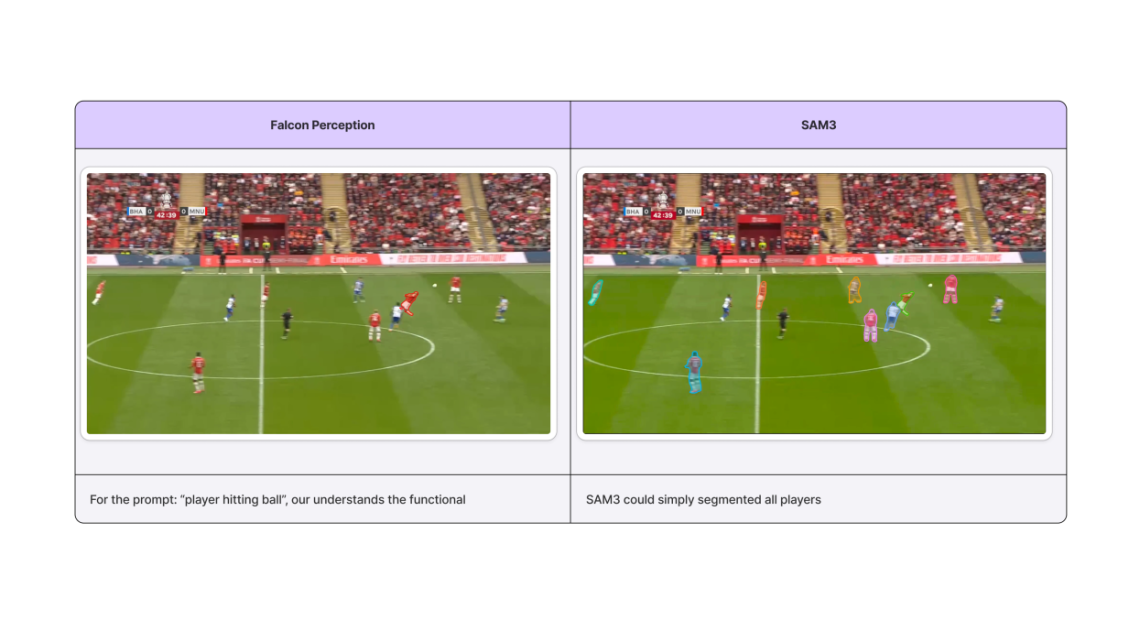
The Technology Innovation Institute has launched Falcon Perception, a new multimodal AI model designed to combine vision and language in a single streamlined architecture. Announced on March 31, the model is positioned as a more efficient alternative to larger systems, with TII saying it can handle tasks such as object segmentation, dense visual understanding and document intelligence while operating with around 600 million parameters.
The model can interpret images, recognize objects, read text and respond to natural-language prompts, helping machines interact more effectively with complex visual scenes.
According to TII, Falcon Perception is aimed at industries where AI must operate in real-world environments, including factory floors, robotics and large-scale document processing. The institute said the model can interpret images, recognize objects, read text and respond to natural-language prompts, helping machines interact more effectively with complex visual scenes.
TII also said the model was designed for a compute-constrained era, when many enterprises face limits around infrastructure, latency, security and cost. Unlike layered multimodal systems that rely on separate models for image processing and language interpretation, Falcon Perception uses a unified architecture from the first layer, which the institute says reduces complexity and computational overhead.
The launch also carries broader significance for the UAE’s sovereign AI ambitions. TII said Falcon Perception positions the country among a small group developing advanced multimodal AI capabilities at scale, while extending the Falcon family beyond language and reasoning models into dense perception tasks. The model will also be released open source on Hugging Face, in line with TII’s collaborative AI development strategy.