Access Control in 2025: Innovation, Flexibility & Integration

As organizations worldwide rapidly adapt to a new era of digital transformation and evolving threats, the future of access control is being redefined. The webinar “Access Control in 2025: Innovation, Flexibility & Integration” brought together two industry leaders, Thomas Deville from IDtech and Khodor Habbouche from Gallagher Security, to discuss emerging technologies, regional demands, and future-ready strategies in access control systems.
Key trends shaping access control in the Middle East and beyond
1. From cards to mobile and touchless biometrics
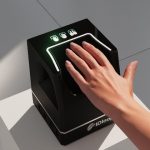
Both speakers agreed: mobile credentials and touchless biometrics are no longer futuristic concepts—they are present-day demands. Driven by hygiene concerns post-COVID and convenience, these technologies are gaining traction. Thomas Deville emphasized the move toward cloud-based solutions and the importance of open platforms, citing that a third of IDtech’s requests now involve mobile access. Gallagher echoed this, noting widespread adoption among universities and government sectors.
2. Security in the age of integration
As access control becomes tightly integrated with video surveillance, HR platforms, and building management systems, cybersecurity is a growing concern. Gallagher introduced its C7000 controller, equipped with dual chips—one for operations, the other for cybersecurity—to future-proof integrations. Meanwhile, IDtech emphasized the importance of strategic focus and strong partnerships in managing integrations securely and at scale.
3. Cloud adoption & centralized control
The Middle East is increasingly embracing cloud-first strategies, led by government initiatives in the UAE and Saudi Arabia. Both IDtech and Gallagher offer hybrid models, allowing customers to adopt either on-premise or cloud-hosted solutions. Gallagher’s centralized database approach, which manages all credentials in one system, minimizes vulnerabilities and streamlines operations.
Challenges and opportunities in the region
- Regulatory variations: Different countries in the Middle East have different requirements. This diversity drives vendors to develop flexible and scalable systems.
- Demand for unified platforms: Organizations want more than just access control. They’re seeking full security management platforms that integrate everything from elevators and intercoms to AI-driven surveillance.
- Human resource gaps: There’s a growing concern around finding skilled installers and developers to match the pace of technological advancement. Both companies emphasized the importance of partnerships with universities and the need for mobile-first solutions to cater to younger, tech-savvy populations.
Company spotlights
IDtech
Founded in Belgium in 1985, IDtech offers a single enterprise access control suite with unlimited scalability. The company focuses on open architecture, modular design, and tight integration with third-party solutions, including Milestone, STid, and Idemia. Their Middle East office supports critical infrastructure sectors including energy, telecom, and transportation.
Gallagher Security
A New Zealand-based company with over 80 years of legacy, Gallagher is unique in offering access control, intrusion detection, and perimeter protection in one unified platform. With strong government certifications and thousands of doors secured across the region, Gallagher is deeply embedded in Middle Eastern markets, notably in Qatar, Saudi Arabia, and Kuwait.
Conclusion & Final Thoughts
The webinar clearly illustrated that access control in 2025 is not just about securing doors—it’s about securing ecosystems. Innovation must be matched by integration, and flexibility must be grounded in long-term strategic planning. Whether it’s cloud migration, AI, or cybersecurity, companies like IDtech and Gallagher are helping shape the resilient infrastructure of tomorrow.