TRASSIR: Centralized Control for Complex Operations

To support the region’s growing need for integrated, scalable control rooms, TRASSIR developed a next-generation PSIM designed for environments where operations span multiple buildings, zones, or sites. The platform enhances multi-department coordination — an essential requirement in high-demand Middle Eastern operations.
By: Irina Ivanova, Content Manager, TRASSIR
Across the Middle East, rapid development has transformed the landscape of security and operations. New industrial zones, transport corridors, logistics hubs, energy facilities, and large mixed-use developments are expanding at a remarkable speed. With this growth comes a familiar challenge: every new building, system, or contractor adds another layer of complexity. Many organizations now operate with dozens of separate platforms for surveillance, access control, fire safety, building automation, perimeter protection, and communication — each with its own interface, rules, and alarm formats.
In busy environments such as logistics hubs, ports, airports, refineries, healthcare campuses, or large residential and commercial estates, this fragmentation often becomes the main barrier to efficiency. Operators must monitor multiple screens simultaneously, manually collect information, and coordinate responses across departments with limited visibility. Even when teams are experienced and well-trained, the sheer volume of data makes it difficult to maintain situational awareness around the clock. Small delays, inconsistent responses, and unclear responsibilities can quickly escalate into operational risks.
These pressures are particularly relevant in the Middle East, where many facilities operate at high capacity, rely on large workforces, and frequently expand in phases. Integrating older systems with new infrastructure is not always straightforward, and replacing existing equipment is rarely practical or cost-effective. As a result, organizations are searching for a way to bring their systems together without interrupting operations or starting from zero.
This is where Physical Security Information Management (PSIM) has gained strong momentum. Rather than replacing systems, a PSIM platform unifies them — creating a single operational picture that allows teams to see, understand, and act with clarity.

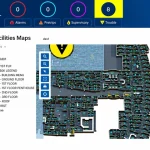
PSIM interface TRASSIR
PSIM: Turning Fragmented Systems Into Unified Oversight
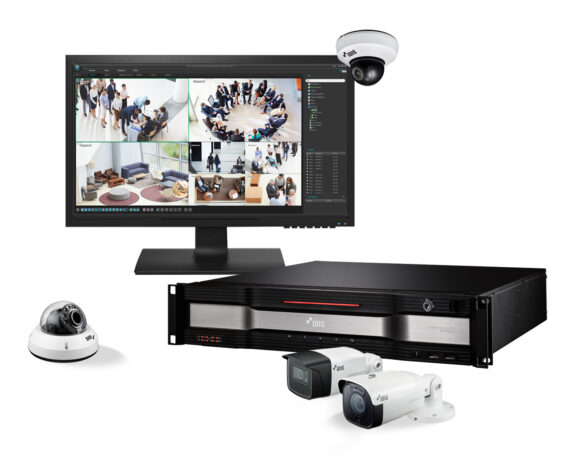
A modern PSIM solution brings together all security and operational data into one interface: CCTV, access control, fire alarms, BMS, perimeter sensors, intercoms, emergency communication, and even third-party business applications. Operators no longer need to switch between dashboards or interpret conflicting alerts. All information is centralized, correlated, and presented within a streamlined workflow that supports faster, more consistent decision-making.
The strength of PSIM lies not only in visualization but in intelligent coordination. When an incident occurs — a forced door, a perimeter alarm, a smoke sensor alert, or a safety breach — the platform immediately brings the relevant video feeds to the screen, highlights the location on a map, and presents response steps predefined by the organization. This structured approach reduces reliance on individual experience and ensures that even complex scenarios are handled in a clear and repeatable manner. For large teams working in shifts, it greatly improves consistency and reduces training time.
TRASSIR PSIM: Designed for Large, Evolving Environments
To support the region’s growing need for integrated, scalable control rooms, TRASSIR developed a next-generation PSIM designed for environments where operations span multiple buildings, zones, or sites. Instead of forcing organizations to standardize all hardware, TRASSIR PSIM connects to existing systems through flexible integrations. This protects earlier investments and allows facilities to expand in stages without disruption. As new cameras, sensors, or access points are added, they are incorporated directly into the unified interface.
The platform also enhances multi-department coordination — an essential requirement in high-demand Middle Eastern operations. Security, safety, maintenance, and management teams can all view the same up-to-date information, eliminating misunderstandings and reducing delays. Automated documentation ensures every action is recorded, helping organizations meet regulatory, compliance, and auditing requirements.
Proven Impact in Real-World Operations
The value of such unified oversight becomes evident in complex infrastructures, where multiple contractors, tenants, or operational units rely on shared services. TRASSIR PSIM enables operators to manage daily activity and emergency scenarios with equal confidence. Routine events such as equipment faults or access requests are handled smoothly, while critical incidents benefit from guided workflows that keep teams aligned, even in high-pressure situations.
In one recent deployment, a multi-building industrial facility faced significant challenges due to separate monitoring rooms and incompatible systems. Operators struggled to build a complete picture of events. After implementing TRASSIR’s platform, the entire operation was centralized into one interface with unified alarm handling and automated procedures. The result was faster response, clearer communication, and a measurable reduction in operator workload.
As Middle Eastern industries continue to grow, the need for unified, intelligent oversight will only become more critical. PSIM is emerging not just as a security tool but as an operational foundation — one that gives organizations the clarity, efficiency, and adaptability required for complex, fast-moving environments.