ScreenCheck: Building Efficiency Through Interconnected Security
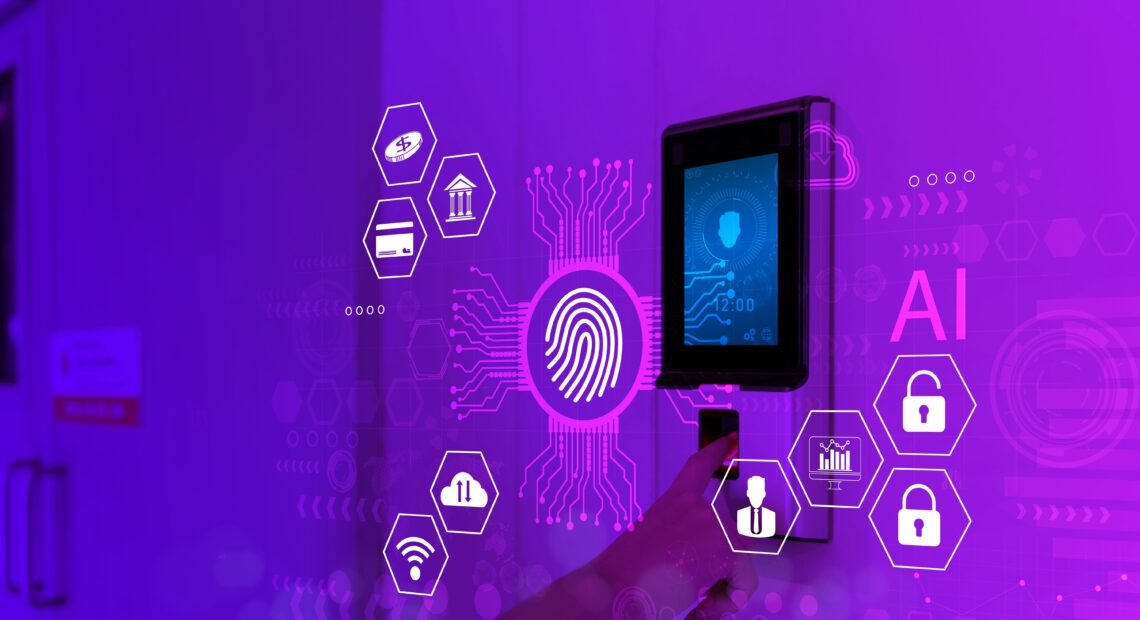
In today’s hyper-connected world, security has evolved from a gatekeeper into an enabler of efficiency ** ScreenCheck engineers interconnected ecosystems where access control, video analytics, alarm management, visitor management, and IoT sensors work together seamlessly. The result is smarter environments, faster responses, and measurable operational gains.
By: Mohamed Zakky, Sales Director, ScreenCheck

Mohamed Zakky, Sales Director, ScreenCheck
The modern enterprise no longer measures success solely by how tightly it locks down its environment, but by how efficiently it operates. True security is achieved when systems communicate, anticipate, and act — allowing protection and productivity to coexist.
From Isolated Systems to Intelligent Ecosystems
Traditional siloed systems create friction: separate platforms for access control, surveillance, and identity management lead to wasted time, manual oversight, and inconsistent reporting. Integrated access control has demonstrated measurable operational benefits. Research from Grand View and Precedence indicates that organizations deploying smart security systems have seen up to a 35% improvement in response times and a 25% reduction in administrative overhead related to manual credentialing and visitor processing.
ScreenCheck’s ecosystem delivers this unification. By linking identity management, video analytics, vehicle access, and environmental controls under one architecture, organizations gain a single version of operational truth. Every credential issued, every entry authorized, and every alarm triggered aligns with a unified data framework, improving decision-making and response while reducing overhead.
Efficiency Through Interconnection
When systems interlink, productivity rises. In ScreenCheck’s architecture, identity management becomes immediate and synchronized: credential issuance and access provisioning occur at the same time, allowing users to be onboarded instantly through pre-mapped permissions and eliminating manual configuration. Visitor workflows follow the same principle. Guests receive mobile or QR-based credentials before they arrive, while integrated access control and video verification automatically validate and track their movement, reducing check-in times by up to 60 percent and generating complete, end-to-end audit trails.
Intelligence operates in the background to reinforce these processes. AI continuously monitors for anomalies such as tailgating, unauthorized entry, or unusual dwell times, and triggers automated responses that may include alerts, lockdowns, or temporary access suspension. Predictive intelligence further enhances security by using IoT-derived data to anticipate risks before they escalate.
Data from across the facility feeds into this unified workflow. Sensors embedded in doors, racks, lockers, and turnstiles provide real-time information on movement, occupancy, and environmental conditions. Combined with access logs, these insights support manpower planning and facility optimization. All relevant events — from access attempts to video feeds and alarms — converge within a single dashboard, enabling operators to visualize, verify, and act immediately. According to industry benchmarks, this consolidated view can reduce incident-resolution times by nearly half.
Smarter Environments, Measurable Gains
Efficiency becomes tangible when technology adapts to the environment it protects. In data centres, ScreenCheck integrates rack-level access, biometrics, video, and IoT sensors into a single control point. Each event is time-stamped, validated, and stored as blockchain-secured audit data, creating tamper-proof records and reducing manual verification.
Hotels, hospitals, corporate offices, and educational campuses function as digital ecosystems. A single ID can operate as an access key, attendance tracker, and resource pass, while visitors and contractors are authenticated through the same workflow. This interconnected environment ensures transparency, safety, and efficient movement across facilities. Across sectors, it delivers measurable results: faster incident response, fewer administrative hours, and improved compliance readiness.
Intelligence That Scales
ScreenCheck’s solutions are designed for scalability and simplicity. Cloud-ready, API-driven, and OEM-integrated, they grow as organizations expand — from single-site deployments to enterprise-wide networks.
Multi-factor authentication and blockchain-verified credentialing maintain identity integrity, while AI-driven analytics adapt continuously to usage patterns, anticipating risks and optimizing operations. IoT integration enables devices and systems to share intelligence, creating proactive security environments that evolve dynamically.
The global access control market — projected to exceed USD 25 billion by 2034 — is driven by these capabilities: integration, automation, and intelligence. Efficiency is no longer a by-product; it has become a defining measure of performance.
Performance Through Partnership
ScreenCheck’s integrated solutions redefine how security contributes to organizational outcomes. They enable faster onboarding and simplified credential management, centralized policies and global scalability, lower operational costs through unified system management, reduced false alarms and faster verification, and audit-ready transparency for compliance and governance. By linking access control with AI video analytics, alarm monitoring, and IoT systems, organizations gain the situational awareness and agility required to stay secure and efficient.
The ScreenCheck Vision
For more than two decades, ScreenCheck has supported enterprises, governments, and campuses across the Middle East, India, and Africa in creating connected, intelligent, and efficient security ecosystems. The mission is to make technology invisible yet impactful — delivering seamless safety and operational clarity through a unified framework.
ScreenCheck believes security should accelerate progress rather than interrupt it, with interconnected systems that do more than protect — they empower, enabling smarter, safer environments for tomorrow.