ISS Tech Transforms Port Security and Operations Across the Middle East
Seaports across the GCC are deploying the SecurOS® Video Intelligence Platform to unify cargo, vehicle, and security operations, enabling high-throughput logistics and real-time oversight within a single AI-driven environment.
By: Sandy Issa, Marketing Manager, Middle East, Intelligent Security Systems
E-mail: sandy.issa@issivs.com
Major commercial seaports across the Middle East — including Khalifa Port in Abu Dhabi, King Abdul Aziz Port in Saudi Arabia, Old Doha Port in Qatar, and Sohar Port in Oman—manage immense volumes of containerized cargo, vehicle traffic, and cross-border logistics operations. As vital hubs of regional commerce, these ports process millions of containers annually and coordinate thousands of truck movements each day, highlighting the importance of efficient intelligent infrastructure management.
To streamline security and operational efficiency, these ports have implemented a fully integrated solution powered by the SecurOS® Video Intelligence Platform, which unifies multiple AI-driven modules into a centralized command system. Key components of the platform include a variety of SecurOS® modules, including Enterprise (VMS), FaceX, Auto, UVSS, Cargo, and Cargo Terminal, delivering advanced monitoring and analytics capabilities.
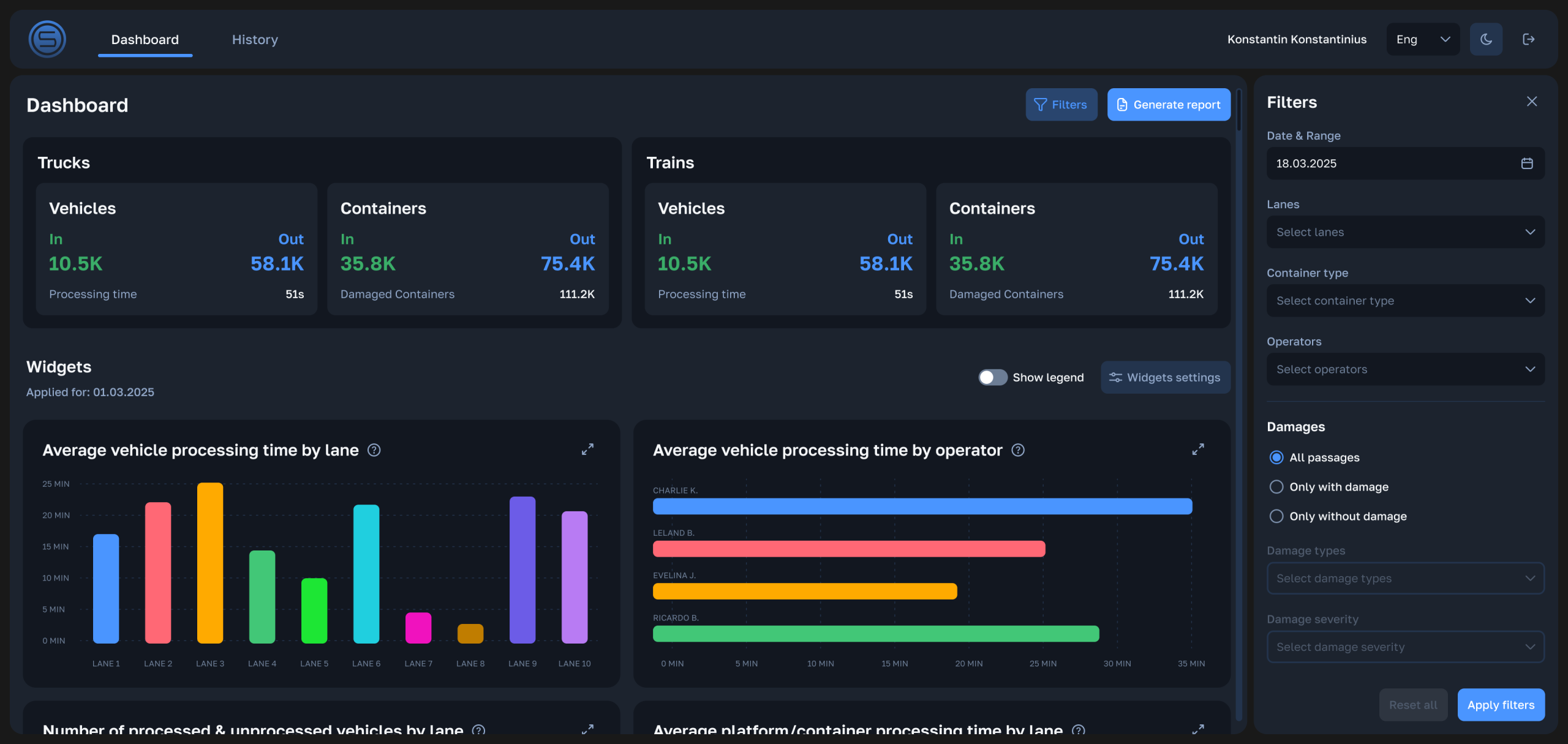
Dashboard for SecurOS® Cargo Terminal is a data-driven control interface that collects all events from cargo gates—including trucks, containers, trains, and drivers—displays them in real time and historical views, and converts raw video and AI detections into structured operational data.
Challenges
Port authorities faced a range of operational and security challenges, including high traffic volumes that caused congestion at entry and exit gates, as well as limitations in manual inspections, which led to delays and increased the risk of human error. At the same time, security threats such as smuggling, unauthorized access, and vehicle-based risks remained a constant concern. These issues were further compounded by a lack of integration between key systems, including video surveillance, access control, and cargo management platforms, resulting in limited visibility into cargo movement and container tracking.
The project’s success was driven by a unified platform approach that replaced fragmented, multi-vendor environments with a single ecosystem, as well as the adoption of AI-driven automation to reduce reliance on manual processes.
System Architecture
The deployed system was based on a layered architecture, comprising an edge layer with cameras, UVSS scanners, and sensors installed at entry and exit points; a processing layer powered by AI analytics for facial recognition, vehicle identification, and cargo analysis; and a platform layer built around the SecurOS® VMS, which unified all modules. This was complemented by an integration layer connecting the system to terminal operating systems (TOS), access control, and customs platforms, as well as a centralized command center for monitoring and control. All modules operate within a single unified interface, enabling operators to manage both security and logistics simultaneously.
Implementation Highlights
The implementation was carried out across multiple port gates and cargo terminals. The system was seamlessly integrated with existing customs and logistics platforms, enabling efficient data exchange and coordination. A phased rollout approach was adopted to avoid operational disruption, while comprehensive training programs were delivered to both operators and security personnel to ensure effective system use and long-term sustainability.
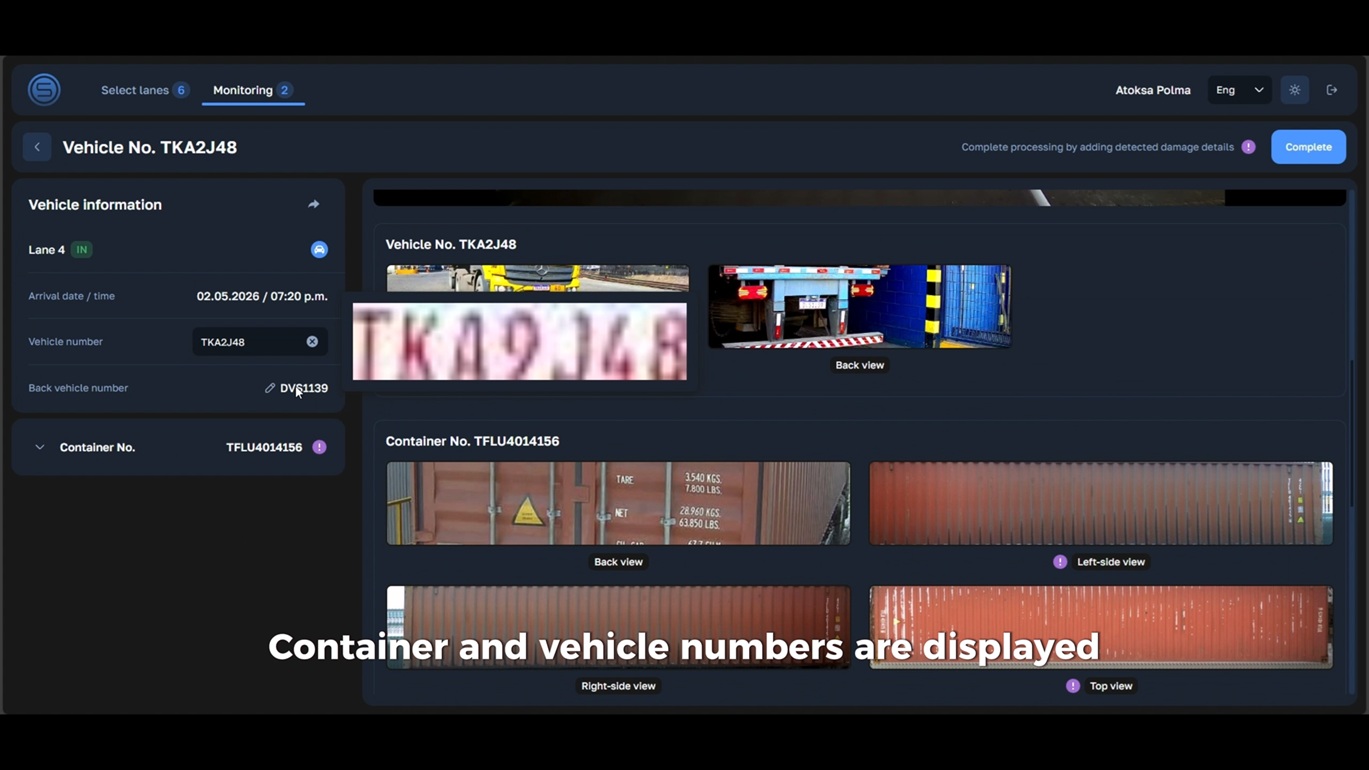
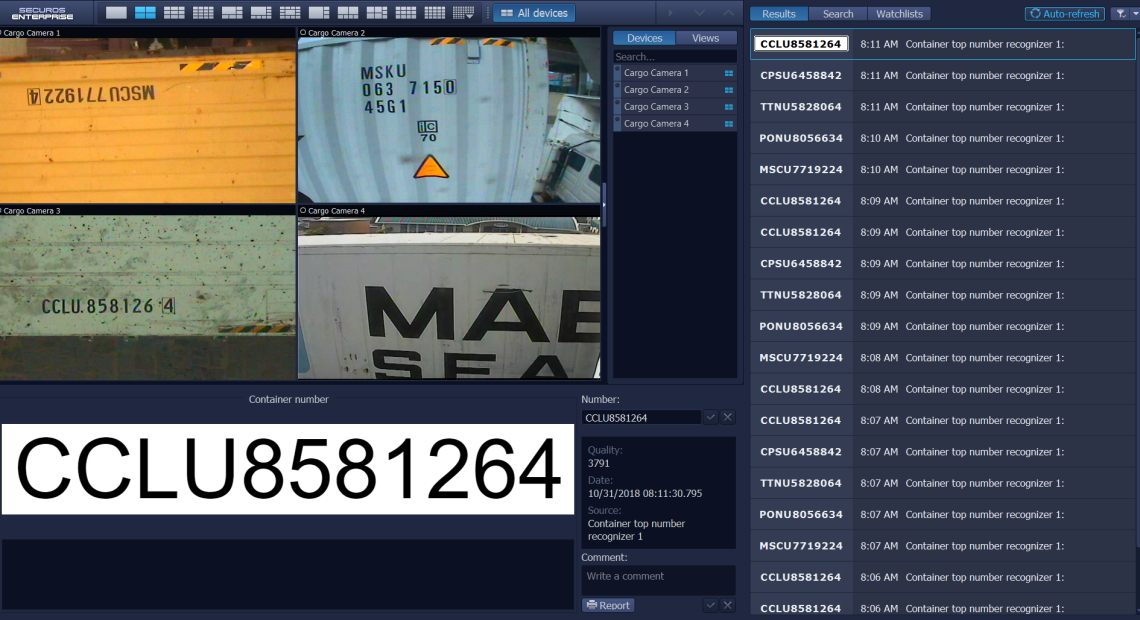
GOS web interface with multiple views where container and vehicle numbers are displayed.
Result & Impact
The deployment delivered significant results and operational impact across multiple areas. Security was enhanced through complete vehicle inspection coverage, improved threat detection, and full traceability of vehicles, drivers, and cargo. At the same time, operational efficiency increased as vehicle processing times at entry points were reduced, eliminating the need for manual data entry and enabling faster cargo clearance and turnaround. Throughput was also improved, with a continuous flow of trucks, higher gate capacity, and reduced congestion, supported by a system designed to scale with future expansion. In addition, real-time dashboards and analytics enabled data-driven decision-making, providing both live operational insights and historical data for audits and performance monitoring. Finally, seamless integration across security, logistics, and access control systems created a unified platform, reducing silos and overall operational complexity.
Key Success Factors
The project’s success was driven by several key factors, including a unified platform approach that replaced fragmented, multi-vendor environments with a single ecosystem, as well as the adoption of AI-driven automation to reduce reliance on manual processes. The system’s scalability enabled it to efficiently support large and complex port operations, while its interoperability ensured seamless integration with third-party and legacy systems.