Communication Comes First. Everything Else Follows
I arrived in Salzburg expecting to see how a manufacturer builds intercom systems. I left with a completely different impression. Behind every demonstration was a simple philosophy: in mission-critical environments, communication always comes first. Over the next hours, I discovered why Commend has spent more than fifty years perfecting something most of us rarely think about until the moment we need it most
By: Damir Muharemović E-mail: editorial@asmideast.com
“Good afternoon. Welcome to Commend. How can I help you?” Among all the conversations we had during our visit to Commend’s headquarters in Salzburg, this was the most unexpected. It came from an intercom.
“Sprichst du auch Deutsch? (Do you speak German?),” asked Georg Winkler, Business Development Director at Commend International.
“Sprache wurde auf Deutsch umgestellt. (The language has been changed to German.)”
Without hesitation, the conversation continued.
“Wo ist die nächste Toilette? (Where is the nearest toilet?)”
“Die nächste Toilette ist rechts, in 30 Metern. (The nearest toilet is to your right, in 30 meters.)”
Then another scenario.
“Ich habe mein Ticket verloren. Was kann ich dort tun? (I lost my parking ticket. What can I do there?)”
“Wenn Sie Ihr Ticket nicht mehr haben, kann ich Ihnen helfen. Bitte geben Sie Ihr Kennzeichen ein. (If you don’t have your ticket anymore, I can help you. Please enter your license plate number.)”
“ABC123.”
“Vielen Dank. Bitte geben Sie jetzt Ihr vierstelliges Passwort ein. (Thank you very much. Now enter your four-digit password.)”
A few seconds later the barrier was opened after entering a four-digit PIN. Then Georg switched to Spanish.
“Do you speak English as well?”
“Language switched to English.”
In a minute the system had seamlessly moved between a couple of languages, answered practical questions, completed a parking scenario and returned to English without the slightest pause. It did not sound like the generic AI assistants we have become accustomed to over the last two years. There was no hesitation, no searching for an answer. It behaved exactly like an experienced operator sitting on the other side of an emergency intercom.
That first demonstration immediately set the tone for our entire visit. Artificial intelligence is currently everywhere in the security industry. Every manufacturer talks about AI-powered analytics, AI detection or AI automation. Commend’s approach feels noticeably different. Rather than using artificial intelligence to analyze images, the Austrian company applies it to what has always been its core competence — voice communication. And the idea makes perfect sense.
When someone is stuck at a parking barrier at midnight, standing on a railway platform, working alone in a plant or stopped inside a tunnel, the first need is not analytics. It is immediate understanding. In those moments, communication comes first. Everything else follows.
Georg smiled while watching our reactions. “At the moment we have about 29 languages,” he explained. “The customer can define the questions that are most frequently asked and prepare tailored answers for parking, smart cities, industry or virtually any other application.”
Then he casually mentioned something even more impressive – the system is already capable of live translation.
One person can speak English while the operator hears Japanese. The response returns instantly in the opposite direction. For anyone who grew up watching Star Trek, Ivy inevitably brings to mind the Universal Translator – the fictional device that made language barriers disappear.
For organizations operating internationally, or for facilities visited daily by thousands of people speaking different languages, the implications are obvious. What struck me even more was that all of it felt practical. Every question Georg asked represented a real situation encountered thousands of times every day.
“Where is the toilet?” “How do I leave the parking?” “I lost my ticket.”
Questions that occupy human operators, consume time and prevent them from focusing on genuine emergencies.
As our host Andreas Hrdlicka, Chief Operating Officer of Commend Austria, would later explain, more than ninety percent of calls received in parking facilities concern only a handful of repetitive questions. If artificial intelligence can reliably resolve those interactions, operators become available for situations where human judgement matters.
Voice Quality Is the Product
Another demonstration followed. This time Georg played an audio recording from inside a road tunnel. The background noise was almost unbearable. Traffic, engines, echoes, alarms and people talking simultaneously merged into a wall of sound where individual words became almost impossible to distinguish. Then Commend’s AI processing was activated. Instantly, the noise disappeared while the human voice remained.
“As long as stress is rising and the situation becomes more uncertain, humans rely on the voice,” Georg said. “If you don’t hear it perfectly, you can’t react. That’s why audio quality isn’t just important. It’s crucial.”
It is one of those statements that sounds obvious until you actually experience the difference. Most of us never think about audio quality because ordinary conversations happen in quiet offices, homes or meeting rooms. Commend designs communication systems for places where quiet almost never exists: tunnels, steel plants, oil refineries, prisons, metro stations, emergency control rooms, hospitals and racing circuits.
Environments where background noise, stress and urgency combine into situations where misunderstanding a single instruction can have serious consequences. That explains why the company still invests huge effort into microphone design, speaker technology, digital signal processing and acoustic laboratories instead of treating audio as just another specification on a datasheet. Voice quality, I realized, is not one feature among many. It is the product.
Commend designs communication systems for environments where background noise, stress and urgency combine into situations where misunderstanding a single instruction can have serious consequences
A Company Built Around the Human Voice
Artificial intelligence may be the newest chapter in Commend’s story, but voice communication has been its foundation for more than half a century.
“The company started in the early 1970s,” Andreas explained. “Telephone systems already existed, but they were still far too expensive for everyday internal communication.” Since then, Commend has grown from a small local manufacturer into a global provider of integrated communication systems with operations in more than sixty countries.
What started as a practical solution for office buildings gradually evolved into something much larger. Instead of focusing on residential door stations, Commend specialized in environments where communication becomes mission-critical. “We are not a door phone manufacturer,” Andreas said with a smile, anticipating perhaps the most common misconception surrounding the brand.
That statement would later be reinforced several times by Drago Labazan, CEO of Commend Adria, the company’s regional subsidiary covering the Adriatic markets. “Whenever people hear the word intercom, they immediately think about a simple door station with one button, one loudspeaker and one microphone,” he explained. “Of course, we can build that as well. But compared to what our systems actually do, that is almost insignificant.”
Forget the Intercom
If the first lesson Commend wanted to teach us was that voice matters, the second was – forget everything you thought an intercom was. In Commend’s world, a single call point can sit inside a much wider operational environment that includes telephony, radio, public address, video surveillance, access control, fire alarms, building management software and emergency procedures. “We are more like a system integrator,” Drago explained. “We integrate communication technologies with each other, but we also integrate communication with every other security system. I sometimes say we are playing with puzzles.”
The image stayed with me. In a real emergency, that integration becomes critical. A fire alarm can trigger cameras, open predefined evacuation routes, connect dispatchers with personnel on site and activate public address messages. Radio users, telephone users and intercom users can become part of the same coordinated response instead of remaining trapped inside separate systems.
This philosophy is embodied in Symphony, Commend’s software platform, which Andreas described as the heart of the ecosystem. It connects intercom stations, emergency telephones, lift communication modules, help points, kiosks and control room consoles with third-party systems. Through open standards such as SIP and ONVIF, Symphony also integrates with platforms including Milestone XProtect and Genetec Security Center, reducing the need to switch between applications.
Designed and Built Under One Roof
Commend’s integrated approach to communication is reflected in the way the company itself is organized. The company still designs and manufactures its equipment in Salzburg, where development, engineering, software design and production remain concentrated under one roof. Even after the manufacturing became a part of the Dutch TKH Group more than a decade ago, Commend has retained operational independence.
“We are in a very comfortable position,” Andreas explained. “Being connected to the TKH ecosystem gives us access to a much broader security portfolio, including CCTV and access control manufacturers, while at the same time preserving a high degree of freedom in how we develop our own technologies.”
Unlike many manufacturers that have gradually shifted production to lower-cost regions, Commend has deliberately kept its engineering and manufacturing close together. Everything is still located in Austria. Georg later explained that the same approach extends to the supply chain itself. “Our plastic components come from around forty kilometers away,” he said. “The stainless-steel parts come from Bavaria, roughly one hundred kilometers from here. We deliberately work with suppliers that are close to us.”
That decision became particularly valuable during the COVID years. While much of the electronics industry struggled with component shortages and disrupted logistics, Commend was able to continue manufacturing because most of its key suppliers were regional.
Every Terminal Tells a Story
Commend’s demonstration center feels less like moving through the different environments where the company’s technology quietly performs its job every day. Almost every terminal has a story. One belongs in a hospital corridor.
Another is designed for underground metro stations. A third can withstand decades of exposure inside an oil refinery, while another is built specifically for prison facilities, motorway tunnels or clean-room environments where even the smallest particle contamination cannot be tolerated. “Our products may look completely different,” Andreas explained, “but fundamentally they all belong to the same communication ecosystem.”
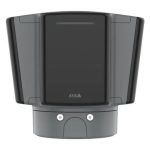
The portfolio ranges from SIP door stations for office buildings to heavy-duty emergency terminals designed for extreme temperatures, vibration, dust, moisture and corrosive industrial environments. Depending on the application, devices may include HD cameras, touch displays, RFID readers, induction loops for hearing-impaired users and configurable buttons for actions such as opening doors, activating barriers, starting emergency procedures or controlling building automation systems.
No Voice Goes Unheard
One of the stops during our tour was Commend’s acoustic chamber. “Acoustics is our core competence,” Georg said as he introduced the facility. Inside an anechoic chamber – a room designed to eliminate sound reflection – the silence feels so unnatural. Your own voice suddenly sounds unfamiliar. There are no echoes. No ambient noise. “Our engineers test every microphone and loudspeaker here,” Georg explained. “What you read in our specifications is not marketing. We verify everything.”
The laboratory also allows Commend to recreate some of the world’s harshest acoustic environments, like factory machinery or emergency sirens. Artificial background noise is introduced into the chamber so engineers can measure exactly how speech intelligibility changes under real operating conditions. For customers managing critical infrastructure, that level of testing matters enormously. A loudspeaker capable of producing impressive sound pressure means very little if operators cannot understand what is actually being said.
“Acoustics is our core competence. Our engineers test every microphone and loudspeaker. What you read in our specifications is not marketing. We verify everything.”
– Georg Winkler, Commend International
Evergreen Technology
That same attention to detail becomes visible throughout the manufacturing process. Before entering the production area, every visitor receives electrostatic protection. Special footwear, grounded wrist straps and carefully controlled workstations prevent microscopic electrical discharges capable of damaging sensitive electronic components. Georg compared the effect to a tiny stone hitting a car bonnet. “You may not notice anything immediately,” he said. “But after some time, that’s where the problem begins.”
Small details determine long-term reliability. Unlike manufacturers producing millions of identical consumer devices, Commend builds systems for projects. Every order is different. “The challenge isn’t producing thousands of identical units,” Georg explained. “The challenge is ensuring every project receives exactly the right combination of components at exactly the right time.”
To achieve that, Commend maintains substantial inventories of electronic components, mechanical parts and finished products. Critical components are often stocked months in advance, allowing production to continue even when global supply chains become unstable. The strategy proved particularly valuable during the semiconductor shortages that affected much of the electronics industry in recent years.
Reliability, however, does not end once a product leaves the factory. Every completed unit undergoes functional testing before being sealed for shipment. The seal itself becomes part of the company’s quality assurance process, allowing engineers to verify whether returned equipment has remained unopened or has been modified in the field.
From Desert Substations to Formula One
That commitment to quality and longevity is ultimately measured in the environments where these systems operate. The range of projects is as remarkable as the engineering behind them. One moment Georg was talking about hospitals. The next, Formula One. Then oil fields in the Kuwaiti desert. A few minutes later, metro stations, airports, prisons and luxury hotels. The company’s technology appears in places that have almost nothing in common except one requirement: when someone presses the call button, failure is not an option. “People often ask us which market we specialize in,” Georg said. “The truth is – we don’t specialize in industries. We specialize in situations where communication simply has to work.”
Fifteen Years in the Kuwaiti Desert
One project perfectly illustrates what Commend means by reliability. Georg smiled before telling the story. “We have around one thousand communication units installed for Kuwait Oil Company.” These terminals are scattered across transformer stations in the middle of the desert, where maintenance visits are expensive and environmental conditions are among the harshest imaginable. Temperatures regularly exceed 50 or 60 degrees Celsius during summer. In winter, rain and sandstorms create an entirely different set of challenges. Everything that can destroy electronics eventually appears. And yet the numbers Georg quoted were astonishing. “After about fifteen years,” he said, “only six units failed. And most of them were damaged by technicians during servicing.”
It is one of those statistics that sounds almost unbelievable until you remember everything you have already seen inside the factory. Commend spends years refining production processes and knows that replacing a communication terminal hundreds of kilometers into the desert is far more expensive than building it properly the first time. For operators of critical infrastructure, reliability is an economic calculation.
Hospitals That Never Really Stand Still
Healthcare offers another example of continuity. The University Hospital Centre Rebro in Zagreb has used Commend technology for more than two decades, with nearly 3,000 communication terminals installed across the hospital complex. Instead of replacing equipment that still works, Commend is integrating the existing infrastructure with newer cloud architecture and AI services.
Drago described a familiar hospital scenario: visitors need directions, registration information or help finding a department. A conversational terminal can provide spoken guidance in the visitor’s language and display captions for hearing-impaired users. If an emergency occurs, the same terminal changes role, displaying evacuation routes and broadcasting instructions instead of routine information.
Formula One: Communication at 300 Kilometers per Hour
Several racing circuits – including Abu Dhabi, Jeddah and Sepang – use the company’s communication systems for operational management. Georg spoke enthusiastically about visiting Yas Marina Circuit and seeing the technology in action. What fascinated him was not the glamour associated with Formula One, but the operational complexity behind every race weekend. Thousands of people. Medical teams. Security personnel. Race control. Television crews. Emergency services. Every one of them depends on communication that functions without hesitation. Everything must work before the first car enters the circuit. Commend has also participated in the redevelopment of Hungary’s famous Hungaroring, where sophisticated touchscreen communication solutions were developed for race management. Although parts of the project remain on hold, Georg spoke about it with obvious pride. Behind the spectacle of Formula One lies a network that keeps the event running safely and efficiently. It is a reminder that, countless mission-critical systems operate quietly in the background – without ever missing a beat.
The Future Has Already Learned to Listen
Time at Commend’s headquarters had passed almost unnoticed. What we had expected to be a standard factory visit had gradually evolved into something more personal. Instead of rushing through departments or delivering rehearsed sales presentations, Andreas Hrdlicka, Georg Winkler and Drago Labazan spent nearly half a day with us. They answered every question. Stopped repeatedly to explain details. Sometimes the conversation drifted away from technology altogether.
Georg joked about still using a Commend intercom he had installed at his own house more than thirty years ago.
“When one of my colleagues visited,” he laughed, “he asked me why I still had those old units at the door. They were still working perfectly. So eventually I replaced them – not because they had failed, but because someone convinced me they looked old.”
That single story probably explains Commend’s greatest challenge better than any sales presentation. Their products refuse to become obsolete. Andreas smiled when the subject came up. “Our systems don’t die,” he admitted. “The sales people don’t always appreciate that.” Everyone around the table laughed.
Yet behind the humor lies a remarkably unusual business philosophy, fundamentally different from the rhythm that dominates today’s technology industry. Instead of encouraging customers to replace functioning equipment every few years, Commend offers continuity and trust.
And after spending half a day with the people behind that philosophy – in an atmosphere that felt more like a conversation among friends – it became easier to understand why so many of their customers stay with them for decades. Technology may open the first door. People are what make you want to come back.