GISEC 2026 puts AI threats and critical infrastructure in focus
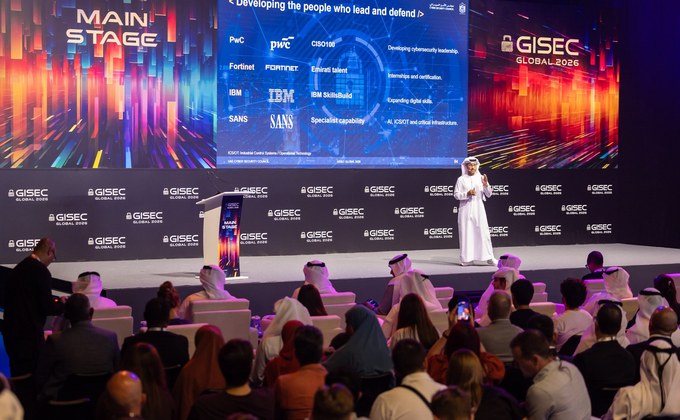
AI-enabled threats, national cyber resilience and critical infrastructure protection dominated the first day of GISEC Global 2026 in Dubai.
GISEC Global 2026 opened at Dubai Exhibition Centre with discussions focused on how artificial intelligence is changing both cyber defense and cybercrime. Speakers also examined the growing links between cybersecurity, national security and the protection of critical infrastructure.
AI threats and national resilience
H.E. Dr Mohamed Al Kuwaiti, Head of the UAE Cybersecurity Council, said critical infrastructure remains a major target as AI changes the threat landscape. He also linked cyber resilience more closely with national and economic security, while stressing the role of collective defense. “Cybersecurity culture is the responsibility of everybody. Our first line of defense is still the community,” he said.
AI-generated deepfakes were another focus. Actor Michael Kelly used his keynote to highlight their impact on identity, consent and trust. He also stressed the need for stronger identity verification and content authentication as voices and likenesses become part of a person’s digital identity.
Critical infrastructure and OT
Sessions on oil and gas and critical infrastructure examined how cyber incidents can move beyond IT systems and create physical and safety consequences.
Compromised operational technology environments, sensor data and digital twins can all affect real-world operations, according to discussions at the event.
Cyber-physical consequences
Compromised OT systems, sensor inputs and digital twins can create physical, safety and operational consequences.
Khaled Al-Taneji, Head of Cybersecurity at ENOC Group, said organizations should assess cyber risk through its potential business, operational and safety impact rather than treating it simply as an IT-versus-OT problem.
He also pointed to the importance of non-cyber safeguards and the ability to switch to manual or degraded operations to keep essential services running during an incident.
Digital sovereignty and practical defense
National security and digital sovereignty also featured across the CyberSecurity Congress and Government Stage.
H.E. Amer Sharaf, CEO of Cyber Security Systems and Services Sector at Dubai Electronic Security Center, highlighted AI-powered defense, trusted digital identity and resilience by design as part of Dubai’s approach. “Safety is not only in the physical world, but also in the digital world. Make cybersecurity a shared responsibility,” he said.
GISEC also moved beyond conference discussions with live ethical-hacking and OSINT demonstrations, the Dubai Cyber Challenge and practical cybersecurity training through the School of Cyber Defense.
GISEC Global 2026 continues in Dubai until September 18, with further sessions covering AI security, critical infrastructure, cloud security, cyber warfare and digital forensics.