HID: How Facial Recognition is Redefining Access Control
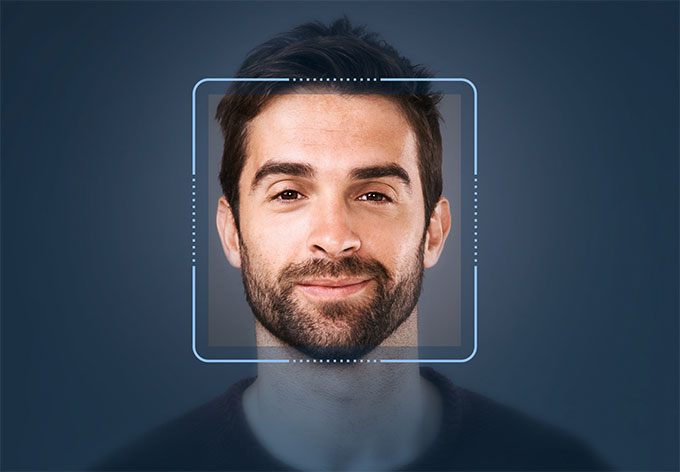
As organizations move toward faster, more secure, and less intrusive access control, facial recognition is becoming a practical option for high-traffic environments. HID’s Amico reader reflects this shift by combining contactless authentication, flexible integration, and privacy-focused biometric data handling in a single access device
By: Sam Cherif, Senior Director, Middle East & Africa, HID; E-mail: PACSGlobalMarcom@hidglobal.com
Security leaders across organizations today face a persistent challenge: how to protect physical assets and facilities without creating friction for the people who need access. Traditional methods such as key cards, PIN codes, and fingerprint scanners remain effective and widely trusted, each serving its purpose depending on the use case and budget. Yet even these proven tools come with inherent limitations: cards can be lost or shared; codes can be forgotten or compromised; and contact-based systems often introduce bottlenecks during rush hour and raise concerns about hygiene.
The answer to overcoming all these challenges increasingly lies in contactless facial recognition, which has moved beyond experimental deployments to a cornerstone of modern access control strategies. It delivers what organizations need most: strong security, high accuracy, and a seamless user experience that does not slow people down.
This shift towards this technology is not happening in isolation: broader trends in workplace technology, heightened security requirements, and evolving user expectations are converging to make frictionless, contactless access not just desirable, but essential. Organizations that once viewed facial recognition as a future capability are now prioritizing it as part of their access control strategy.
Biometrics Becoming a Standard for Identity
Biometric authentication is now firmly embedded in everyday life, with consumers using it to unlock devices, authorize financial transactions, and verify their identity in enterprise environments. For organizations, biometrics provide a clear advantage. By linking access credentials to unique human characteristics, they reduce the risks associated with credential sharing or theft while improving both security and user experience.
This momentum is reflected in market growth. The global biometrics market is expected to grow by nearly 130% over the next six years, exceeding $134 billion by 2032. Contactless technologies, including facial recognition, iris scanning, and palm vein identification, are projected to see the fastest growth, driven by demand for fast, secure, and hygienic authentication. The Middle East and Africa (MEA) region mirrors this trajectory, with even stronger acceleration in some markets. According to recent reports, the regional market is projected to exceed $4.5 billion by 2028, fueled by national digital transformation agendas and large‑scale infrastructure modernization. The MEA biometric technology market already generated $3.35 billion in revenue in 2023, and is expected to grow at a CAGR of 20.7% from 2024 to 2030, outpacing many global regions.
Biometrics continue to gain momentum in enterprise security. HID’s “2026 State of Security and Identity Report shows that 45% of organizations now view biometric technologies as a strategic priority, with fingerprint and facial recognition leading adoption. Identity management is also rising in importance, with 73% of organizations ranking it as a top security focus and 75% either deploying or actively evaluating unified identity solutions. Yet progress comes with hurdles: organizations still cite integration complexity, budget pressures, and limited in‑house expertise as key barriers, reinforcing the need for solutions that deliver strong security while remaining scalable and easy to implement.
Understanding Biometric Modalities
Several biometric technologies are commonly used in access control, each offering different advantages: facial recognition enables fast, contactless authentication using face templates derived from camera images. It supports high-throughput environments and continues to improve in accuracy, even in low-light conditions. Meanwhile, fingerprint recognition delivers high accuracy and quick verification but involves physical contact, which is leading some organizations to reconsider its use.
The market for biometrics in physical access control is also expanding rapidly, expected to reach USD 7.8 billion by 2032, representing a 200% increase. Growth is being driven across sectors, including government, healthcare, financial services, data centers, manufacturing, and transportation, where precise identity verification is critical.
Key Considerations for Implementation
As organizations evaluate facial recognition solutions, several factors remain critical. Systems must deliver high recognition performance, supported by strong benchmarking standards such as the NIST Face Recognition Technology Evaluation (FRTE). Image quality is also essential, with high-performance readers typically featuring dual 1080p cameras, capturing both visible and near-infrared images to ensure reliability even in low-light or no-light environments. Speed is equally important. A benchmark of 0.2-second recognition time enables seamless, walking-speed authentication, particularly in high-traffic areas.
Solutions should also support multi-factor authentication beyond facial recognition, including cards, PINs, QR codes, or mobile credentials. At the same time, privacy and security must be built in, with strong encryption, compliance with regulatory frameworks, and options for secure biometric data storage, including storage on credentials rather than centralized databases.
Integration is another key requirement. As organizations adopt enterprise-wide approaches to access control, facial recognition systems must integrate smoothly with existing infrastructure using protocols such as OSDP or Wiegand. This is where platforms such as the HID Amico facial recognition reader add value, delivering fast, accurate facial recognition in a sleek, durable design while offering flexible integration options that make it easy for organizations to modernize access control without disrupting existing systems.
Moving Forward with Confidence
The value of facial recognition in access control is no longer theoretical. Organizations across industries are already seeing measurable results, including faster throughput, reduced administrative burden, improved compliance, and a more seamless user experience.
What distinguishes successful deployments is not just the technology itself, but how it is implemented. Choosing the right solution, ensuring proper integration, and engaging stakeholders across IT, security, HR, and operations are all critical to success.
At the same time, privacy considerations must remain a priority. Leading solutions now offer flexible data storage, strong encryption, and alignment with evolving regulatory requirements. Organizations that address these considerations proactively can build trust while protecting sensitive biometric data.
As technology continues to evolve and adoption grows, facial recognition is becoming a defining element of modern access control. For organizations looking ahead, it offers a clear path toward stronger security, improved efficiency, and a truly frictionless access experience.