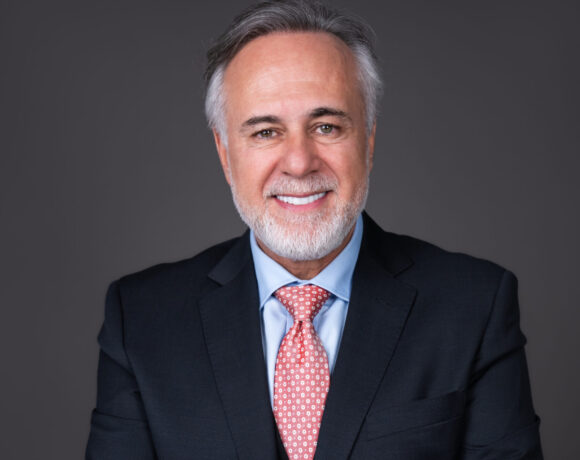
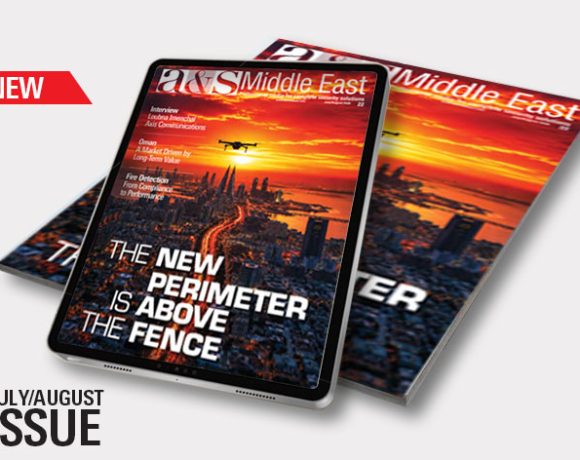
Interview: Loubna Imenchal, Managing Director for the Middle East, Africa, Türkiye, and Central Asia, Axis Communications

There is no more powerful endorsement than a customer sharing how technology has solved a real business challenge. Throughout my career, I have been impressed by how willing Axis customers are to share their experiences and collaborate with peers. That level of trust is something you build over many years, and it is one of the reasons successful projects continue to create opportunities far beyond the region where they began
By: Damir Muharemovic E-mail: editorial@asmideast.com
a&s Middle East: Ms. Imenchal, you joined Axis recently. Could you tell us about your professional background and your role today?
Imenchal: I have spent more than 24 years leading technology and security businesses across Europe, the Middle East, Africa and Asia, helping organizations accelerate digital transformation while building high-performing regional businesses. In my role at Axis, I manage the Middle East, Turkey, Africa, and Central Asia, one of the world’s most diverse and fastest-evolving security markets. We have strong growth in the Middle East that is driven by innovation. And we have high demand in each sector—smart cities, oil and gas, airports, and healthcare. Axis specializes in providing the latest innovations to solve increasingly complex security challenges.
a&s Middle East: How large is the organization you manage, and where does Axis operate in your region?
Imenchal: We have 82 people who operate across 72 countries in the Middle East, Turkey, and Central Asia, the region I cover. And we have more than eight offices covering all those countries.
a&s Middle East: What attracted you personally to Axis as a company?
Imenchal: What attracted me to Axis wasn’t only its technology leadership—it was its values. I still remember reading about one particular decision during the COVID period. At a time when many companies saw thermal cameras as a billion-dollar opportunity, Axis took a different path. The company openly said, “We will not commercialize a solution if it creates expectations we cannot genuinely deliver.” They chose long-term trust over short-term revenue.
That moment stayed with me because, after more than two decades in leadership, I’ve learned that technology can always be replicated, but integrity cannot. Products evolve, markets change, competitors catch up, but trust is one of the few competitive advantages that compounds over time.
When I joined Axis, I saw those values in action. I watched our teams tell customers, “Don’t buy this solution—it isn’t the right fit for your environment.” That isn’t how a traditional vendor behaves. That’s how a trusted advisor behaves. Instead of trying to maximize a single transaction, they focus on building relationships that last for years. That is when I knew I had joined the right company. For me, the future of business is not simply about delivering the best technology; it’s about becoming the partner customers trust to help them make the right decisions. That’s exactly what Axis stands for, and it’s the kind of organization I wanted to lead.
a&s Middle East: How would you describe the current security market in the region you oversee?
Imenchal: The industry has fundamentally shifted from capturing images to generating actionable intelligence. Cameras are becoming intelligent sensors within a broader data ecosystem. Increasingly, the real value lies in analytics, AI, edge computing and the ability to transform data into faster and better operational decisions. That evolution is changing how organizations protect people, infrastructure and business continuity.
From Vision to Reality
a&s Middle East: Axis recently celebrated an important milestone in the UAE. Could you tell us more about that?
Imenchal: Yes, this is a milestone we are incredibly proud of, because it represents much more than an anniversary. It represents two decades of trust. Twenty years ago, the UAE was already demonstrating extraordinary ambition. The country wasn’t simply investing in security; it was investing in a vision of becoming one of the safest, smartest and most connected nations in the world. Axis had the privilege of being part of that journey from the beginning.
Throughout those years, we have worked alongside governments, airports, transportation authorities, healthcare providers, educational institutions and commercial enterprises. Many of those relationships have continued for years because they were built on partnership rather than transactions.
Today, when you visit airports, smart cities, transportation networks, hospitals or iconic landmarks across the UAE, you will often find Axis technology supporting critical operations. That isn’t just a reflection of our products; it’s the result of consistently delivering on our commitments and evolving with our customers’ needs.
Looking ahead, we see this anniversary not as a celebration of the past but as the foundation for the next chapter. As AI, data analytics and intelligent infrastructure continue to transform the security industry, we remain committed to helping the UAE deliver on its vision while continuing to innovate alongside our customers.
a&s Middle East: How do successful projects in the Middle East influence other markets?
Imenchal: The Middle East has become one of the most important reference markets for innovation in the security industry. What happens here is closely watched because customers are willing to adopt new technologies at scale and set ambitious standards for digital transformation. When a solution proves successful in this region—whether in smart cities, airports, critical infrastructure or AI-driven security—it provides confidence for customers in other markets to accelerate their own transformation. We increasingly see successful deployments in the Middle East becoming benchmarks that influence projects across Europe, Africa and other regions.
The UAE, for example, is making significant investments in AI, smart infrastructure and large-scale national projects, while other regions look to proven use cases that demonstrate both operational value and return on investment. Innovation is no longer happening in isolation; successful ideas travel quickly across markets.
One of the strongest accelerators of that process is customer advocacy. There is no more powerful endorsement than a customer sharing how technology has solved a real business challenge. Throughout my career, I have been impressed by how willing Axis customers are to share their experiences and collaborate with peers. That level of trust is something you build over many years, and it is one of the reasons successful projects continue to create opportunities far beyond the region where they began.
a&s Middle East: What are some of the major projects Axis has been involved in recently?
Imenchal: Our portfolio spans some of the region’s most complex and strategically important environments, including international airports, critical infrastructure, smart cities, energy, transportation, healthcare and education.
We are proud to contribute to many iconic projects across the Middle East. Whether it’s supporting security at UAE airports, protecting critical energy infrastructure, enabling smart city initiatives, or contributing to landmarks such as Burj Khalifa and some of the UAE’s leading museums, these projects reflect the confidence customers place in Axis to secure environments where reliability is absolutely critical.
What makes these projects significant is not simply their scale, but the complexity of the challenges they solve. Today’s customers expect much more than video surveillance. They need intelligent solutions that transform data into actionable insights, strengthen operational resilience and enable faster decision-making.
That’s why our approach is industry-led rather than product-led. The security challenges of an airport are fundamentally different from those of a hospital, a manufacturing facility or a university. Our role is to understand those operational realities and deliver solutions tailored to each environment.
For example, in education, AI-powered analytics can help detect vaping and improve student safety, while in manufacturing they can identify operational risks before they disrupt production. In airports and smart cities, AI helps operators manage large volumes of data in real time, enabling faster responses and more efficient operations.
Ultimately, our ambition is not simply to deploy technology; it is to help organizations become safer, smarter and more resilient through intelligent, data-driven security.
The Middle East Is Defining Global Technology Trends
a&s Middle East: How important is the Middle East in driving innovation in security technologies?
Imenchal: The Middle East has become one of the most influential regions shaping the future of security technology, not simply because it adopts innovation quickly, but because it has the ambition to deploy it at scale.
What makes this region unique is the willingness of governments and organizations to think long term. They are not looking to solve today’s security challenges alone; they are designing the digital infrastructure for the next decade. Whether it’s smart cities, critical infrastructure, transportation or AI-enabled public services, innovation is becoming part of national strategies rather than isolated technology projects.
The UAE is a great example of that vision. Over the years, we’ve seen ideas that were once considered futuristic evolve into real deployments. Conversations that started around concepts such as AI, automation and intelligent infrastructure have now become operational reality. Today, the focus is no longer on whether these technologies will be adopted, but on how quickly they can deliver measurable value.
That creates an exceptional environment for companies like Axis. Our customers continuously challenge us to innovate, and that pushes us to develop solutions that are not only technologically advanced but also capable of solving real operational challenges. Many of the innovations and best practices proven in the Middle East are now influencing projects in other parts of the world.
For me, the Middle East is no longer following global technology trends; it is helping define them. That is what makes this region such an exciting place to lead and to innovate.
a&s Middle East: What is the strategic direction for Axis in the coming years?
Imenchal: If I had to summarize our strategy in one sentence, it would be this: to become the most trusted industry specialist rather than a one-size-fits-all security provider.
We believe the future of security is no longer about selling cameras—it’s about understanding industries. Every sector has its own operational challenges, regulatory requirements and business priorities, which means the same technology must deliver very different outcomes depending on the environment.
For example, an oil and gas customer is looking to protect critical infrastructure, ensure worker safety and prevent operational disruption. The analytics, the data and the response required are completely different from those of a retail environment such as Dubai Mall.
In education, the priority is creating a safe learning environment. Our analytics can help detect vaping in schools and alert staff before situations escalate. In manufacturing, AI-powered analytics can identify anomalies that may lead to production interruptions, allowing operators to act proactively before downtime occurs. In every industry, the value lies not in capturing images, but in transforming data into actionable intelligence.
That is why we continue to invest heavily in AI, analytics and software. Solutions such as our ACS platform have evolved from being considered a “nice-to-have” to becoming business-critical. Customers today expect security systems not only to protect assets but also to improve operational efficiency, resilience and decision-making.
Ultimately, our ambition is to move the conversation from products to outcomes. When customers think about securing airports, critical infrastructure, education, healthcare or manufacturing, we want Axis to be recognized not simply as a camera company, but as the trusted partner that understands their industry and helps them solve their most complex operational challenges.
a&s Middle East: The security industry is still largely male-dominated. How do you see the role of women evolving in this field?
Imenchal: I have seen significant progress over the past two decades, but there is still work to do. Early in my career, I often found myself in situations where I was the only woman in the room. When I joined Honeywell, I was the only female member of the leadership board. Later, at Johnson Controls, I became the only female Vice President globally, and as a Moroccan and Arab woman, that made the journey even more unique. Those experiences taught me resilience, but more importantly, they showed me why representation matters.
Today, I am encouraged by the progress we are seeing. More women are entering technology and security careers than ever before. However, the biggest challenge is no longer attracting women into the industry—it’s ensuring they continue progressing into senior leadership. We still see a significant drop in representation at middle management and executive levels, and that is where organizations need to focus their efforts.
One of the reasons is visibility. Around the world—and especially here in the Middle East—we have exceptional women leading technology, cybersecurity and digital transformation as CIOs, CTOs and senior executives. I have met many remarkable Emirati and international women who are shaping the future of our industry. Yet their stories are rarely told. If young women cannot see role models, it becomes much harder for them to imagine themselves in those positions.
That’s why I believe visibility is just as important as opportunity. When we showcase successful women, we inspire the next generation, challenge outdated perceptions and demonstrate that leadership is defined by competence, vision and impact—not by gender.
Ultimately, diversity is not simply about fairness; it is about better business. The most innovative organizations are those that bring together different perspectives, experiences and ways of thinking. Our responsibility as leaders is to create an environment where talent can thrive, regardless of gender, and where the next generation has even greater opportunities than we did.
a&s Middle East: You also created an initiative supporting women in technology. What is Connect2Elevate about?
Imenchal: Connect2Elevate was born from a simple observation I made throughout my career: exceptional women in technology exist everywhere, but too often they are invisible.
I launched the initiative while I was Vice President at Logitech, with the company’s sponsorship, because I wanted to create a platform where women in technology could connect, learn from one another and, most importantly, increase their visibility. We started in the Middle East, and today the initiative continues to grow beyond the region.
I remember speaking with a very accomplished senior executive in the security industry. She told me something that stayed with me: “Every member of my team has been featured in the media, but no one has ever interviewed me.” She was leading the organization, yet the visibility was going to the people reporting to her. It made me realize that this isn’t a talent issue; it is a visibility issue.
Throughout my career, I have met outstanding women leading cybersecurity, AI, digital transformation and technology organizations. They are CIOs, CTOs and business leaders driving major transformations, yet many remain behind the scenes. If they are not visible, young women entering the industry have fewer role models to inspire them.
That is exactly what Connect2Elevate is trying to change. It is not simply a networking platform; it is a platform to amplify voices, create meaningful connections, share knowledge and inspire the next generation of women leaders. My ambition has always been simple: if Connect2Elevate helps even one young woman believe that a leadership career in technology is possible, then we have already created lasting impact.
a&s Middle East: Axis is also pushing for more diversity internally. What does that look like in practice?
Imenchal: At Axis, diversity is not viewed as a social initiative—it is viewed as a business advantage. The best decisions are made when different perspectives, experiences and backgrounds come together to solve complex challenges.
We also recognize that the security industry has historically been male-dominated, which means creating a more diverse workforce requires long-term commitment rather than short-term initiatives. What I appreciate about Axis is that diversity is embedded in our culture because we genuinely care about people and believe it strengthens innovation, collaboration and customer understanding.
We are seeing more women entering technology than ever before, particularly among the younger generation. That gives me confidence about the future. Our responsibility now is to create the right environment where they can continue to grow into leadership positions, because attracting talent is only the first step; developing and retaining that talent is what creates lasting change.
For me, success won’t be measured by how many women enter the security industry today, but by how many go on to lead it as CEOs, CIOs, CTOs, Heads of Security and business leaders. That is the legacy we should all be working toward.