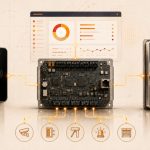
The Future of Technology Procurement in the AI Era

Selecting the right technology is no longer simply about comparing products and prices. In the AI era, successful procurement depends on choosing platforms that can continuously evolve through software, integration and innovation.
By: Loubna Tabbara, Marketing and Sales Director, Tabbara Electronics
E-mail: pr@tabbara-electronics.com
Technology has evolved from standalone hardware into intelligent, software-driven ecosystems. Procurement, however, often continues to evaluate those ecosystems using criteria developed for standalone products, while today’s platforms evolve to expand through software, artificial intelligence, cloud services, cybersecurity enhancements, and integrated applications. This growing disconnect is reshaping how technology investments should be evaluated. The purchase order may close a transaction, but it does not determine the success of the investment.
Technology Has Changed. Procurement Hasn’t
Across public safety, transportation, utilities, energy, and industrial operations, artificial intelligence is no longer viewed as an emerging capability. It is becoming part of everyday operations. AI delivers its greatest value not through individual devices, but by connecting information across multiple systems to identify patterns, automate workflows, and improve decision-making.
As a result, organizations are no longer investing in products that perform a single function. They are investing in platforms that must continue evolving throughout their operational life. This shift also changes the nature of procurement risk. The greatest cost of selecting the wrong platform is often not the expense of replacing it. It is the innovation an organization can no longer access. Decisions made during procurement determine whether future capabilities can be adopted through software, integration, and continuous innovation, or whether they require costly replacement projects that could have been avoided. Technology is no longer defined by the capabilities it delivers on day one. Its true value is measured by the capabilities it continues to gain over its lifetime.
Platforms Are Replacing Products
The strongest technology providers are no longer distinguished solely by the quality of individual products. They are differentiated by the strength of the ecosystem surrounding those products and by their ability to continuously expand that ecosystem through innovation.
Motorola Solutions illustrates this evolution through a strategy that has expanded beyond mission-critical communications into an integrated ecosystem spanning video security, command center software, access control, advanced analytics, and artificial intelligence.
This strategy illustrates a broader industry trend. Modern technology platforms create greater value because they allow intelligence to flow across multiple applications instead of operating as isolated systems. Communications, video, analytics, and command center software become more powerful when they work together, enabling organizations to unlock capabilities that individual products could never deliver on their own.
Distributors today are expected to understand manufacturer roadmaps, advise on solution architecture, support technical enablement, and ensure investments remain aligned with future operational requirements.
Why Distribution Has Become Strategic
The evolution of technology has fundamentally reshaped the role of distribution. Not long ago, value was measured by product availability, competitive pricing, and efficient logistics. Those capabilities remain important, but they are no longer enough. As technology platforms become increasingly software-driven and interconnected, customers need more than access to products. They need guidance on how those technologies fit into a long-term operational strategy. The challenge is no longer selecting the right individual technology. It is ensuring every procurement decision contributes to a platform that can continue evolving. Today’s decisions should enable tomorrow’s capabilities, not limit them.
This is where value-added distribution partners create measurable impact. Distributors today are expected to understand manufacturer roadmaps, advise on solution architecture, support technical enablement, help partners navigate licensing and software evolution, and ensure investments remain aligned with future operational requirements. These responsibilities rarely appear on a quotation, yet they often determine long-term project success.
At Tabbara Electronics, our role extends beyond supplying technology. We help system integrators and end users understand the broader ecosystem behind every investment, enabling them to make procurement decisions that are not only technically sound today, but also strategically relevant for the future.
Procurement Must Start Asking Better Questions
Artificial intelligence will continue changing the way organizations communicate, secure facilities, and manage critical operations. Procurement strategies must evolve at the same pace. Instead of asking only what a solution costs today, organizations should also ask: Will this platform continue to evolve over the next five to ten years? Is AI embedded across the platform or offered separately? Can future capabilities be added without replacing existing infrastructure? Do our partners understand the platform’s long-term roadmap?
These questions shift the conversation from purchasing equipment to investing in long-term capability. Technology rarely becomes obsolete because it stops working. More often, it becomes obsolete because innovation moves elsewhere.
Procurement has always been about creating value, but the definition of value is changing. In the AI era, it can no longer be measured solely by acquisition cost or technical specifications. It must also consider a platform’s ability to evolve, the strength of the ecosystem supporting it, and the expertise of the partners responsible for bringing that technology to life.
Successful procurement is no longer about selecting the right product. It is about selecting the right platform, ecosystem, and partners to ensure today’s investment continues creating value tomorrow.