Interview: Peter Strom, President & CEO, March Networks & VIVOTEK

March Networks and VIVOTEK will, as part of Delta’s newly established Building Automation Business Group, operate together within the security solutions division. The goal is to bring all components of security solutions into a single integrated platform, enabling end users to access and monitor all information in one place.
By: Damir Muharemovic; E-mail: editorial@asmideast.com
a&s Middle East: Could you briefly share your career journey and your current role within Delta?
Strom: My career has been rooted in video surveillance and security technology for over two decades. I’ve had the privilege of leading organizations through significant periods of industry transformation, from the shift from analog to IP-based video, through the rise of analytics, hybrid and cloud video, and into the era of AI-driven intelligence. I currently serve as President and CEO of both March Networks and VIVOTEK, two complementary brands that together form a significant part of Delta Electronics’ security and surveillance portfolio. In that role, I’m focused on driving growth, innovation, and integration across both companies while aligning closely with Delta’s broader strategic vision for smart buildings, transport, and intelligent infrastructure.
a&s Middle East: For readers who may be less familiar, could you provide an overview of Delta Electronics—its origins, core business, and global presence today?
Strom: Delta Electronics was founded in 1971 in Taiwan and has grown into a global leader in power and thermal management technologies. In 2025, Delta reported $17.9 billion in consolidated sales revenue, supported by a global network of 165 sales offices, 55 manufacturing sites, and 73 R&D centers. Its mission, “To provide innovative, clean, and energy-efficient solutions for a better tomorrow”, underpins everything the company does.
What many in the security industry may not immediately appreciate is the breadth of Delta’s portfolio. Beyond power supplies and EV charging infrastructure, Delta has made strategic investments in building automation, smart manufacturing, data center infrastructure, and, increasingly, security and surveillance. The acquisitions of VIVOTEK and March Networks were deliberate moves to build world-class capabilities in this space and integrate them with Delta’s wider smart building and IoT ecosystem.
a&s Middle East: Delta has been expanding its presence in the security and surveillance space. How does Delta approach this market, and what role does surveillance play within the broader business?
Strom: Delta’s approach to security is fundamentally different from that of a standalone surveillance vendor. Rather than treating video as an isolated system, Delta sees surveillance as a core data layer within intelligent buildings and infrastructure. Security cameras and video management platforms generate extraordinarily rich data, and when that data is integrated with access control, building automation, energy management, and operational systems, the value multiplies dramatically.
March Networks brings deep expertise in enterprise and regulated-industry VMS and video analytics. VIVOTEK brings a strong hardware portfolio in network cameras, NVRs, and edge AI capabilities. Together, within the Delta family, we have the pieces to deliver truly integrated, end-to-end solutions that go well beyond traditional security.
Pull Quote (egida)
March Networks brings deep expertise in enterprise and regulated-industry VMS and video analytics. VIVOTEK brings a strong hardware portfolio in network cameras, NVRs, and edge AI capabilities. Together, within the Delta family, we have the pieces to deliver truly integrated, end-to-end solutions that go well beyond traditional security.
Intelligence in the Hands of Business Users
a&s Middle East: How do you see the role of video surveillance evolving—from traditional security to more intelligent and proactive applications?
Strom: The industry is undergoing a fundamental shift. For years, video surveillance was reactive; cameras recorded events so you could review footage after an incident. That model is being replaced by proactive, intelligence-driven video that helps organizations prevent incidents, optimize operations, and make better decisions in real time.
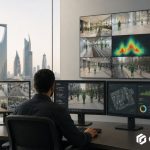
AI is the engine behind this transformation. Today’s cameras and analytics platforms can detect anomalous behavior, identify safety hazards, monitor occupancy and flow, and surface actionable insights, all automatically. But the most exciting development is what happens when you make that intelligence accessible to business users. That’s what our Searchlight Cloud platform does. By connecting video with IoT and transaction data from POS systems and ATMs, it puts video-based business intelligence directly in the hands of operations, loss prevention, and executive teams — not just security personnel. We offer VORTEX, our camera-to-cloud solution, purpose-built for organizations that want simplicity and a fully cloud-managed experience without on-premise infrastructure. We also have March Networks Command Enterprise, our enterprise-grade VMS, designed for the largest and most complex deployments. Searchlight Cloud works across both platforms, so customers get the same powerful business intelligence layer regardless of their deployment model. The “security camera” is genuinely becoming a core business tool. That’s a profound shift, and it’s one Delta is uniquely positioned to lead.
a&s Middle East: Within this context, what role does the Building Automation Business Group (BABG) play in shaping Delta’s security and smart infrastructure strategy?
Strom: Delta’s BABG brings together building-focused technologies across automation, energy management, security, and intelligent infrastructure. Within that structure, VIVOTEK and March Networks are becoming more closely aligned to expand Delta’s security ecosystem and deliver more integrated solutions. This matters enormously for end customers. A building operator shouldn’t need to log into five separate systems to manage security, energy, access, and environmental controls.
a&s Middle East: How does BABG integrate video surveillance with other building systems to deliver a unified solution?
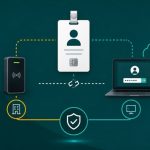
Strom: Integration happens at several levels and takes time. At the hardware layer, Delta’s network infrastructure and edge computing products provide the foundation. At the software layer, open APIs and standards-based protocols enable VIVOTEK and March Networks solutions to connect with Delta’s building automation platforms and third-party systems. And at the AI and analytics layer, we’re looking at capabilities that allow insights from video to trigger automated responses across building systems, for example, a tailgating detection event that automatically locks down access points, or an occupancy reading that adjusts HVAC in real time.
The same logic extends beyond buildings into transport infrastructure. Our purpose-built mobile surveillance solutions are deployed across bus fleets, shuttles, and rail, which are environments with very different technical demands from fixed installations. Bringing those capabilities into the Delta ecosystem means we can follow a customer’s needs from the building to the vehicle and back again, which is increasingly relevant as smart city projects blur the boundary between building management and transit infrastructure.
a&s Middle East: What differentiates Delta BABG’s approach to security and surveillance compared to other vendors in the market?
Strom: The key differentiator is genuine end-to-end ownership. Many vendors claim integration, but they’re actually assembling third-party components and hoping the APIs hold together. Delta brings together many of the critical building blocks under one group, including building automation, camera hardware, video management software, cloud services, and supporting infrastructure. That gives customers a deeper level of integration and accountability than a loosely assembled third-party stack.
a&s Middle East: How is Delta leveraging AI, cloud, and edge technologies to enhance security outcomes for customers?
Strom: AI is being deployed at the edge, in the camera itself, to enable real-time analytics without the latency or bandwidth costs of sending everything to the cloud. VIVOTEK has been building edge AI capabilities into its hardware for several years, and that investment is paying dividends. At the same time, cloud connectivity allows for centralized management, remote access, and aggregation of data across distributed sites, which is particularly valuable for enterprise and multi-site customers. March Networks’ platform is designed to operate effectively in hybrid environments, giving customers the flexibility to balance edge processing with cloud-based intelligence based on their specific needs and infrastructure.
a&s Middle East: Looking ahead, what is the vision for Delta BABG in the security and surveillance space over the next 5 to 10 years?
Strom: The vision is for Delta to be recognized as the global leader in intelligent building security and automation, not just as a camera or software vendor, but as a trusted partner for organizations that want their buildings to be safer, smarter, and more sustainable. That means continuing to invest in AI capabilities, expanding our global channel and integration partner ecosystem, and deepening the integration between surveillance and the broader Delta building platform.
We also see significant growth opportunities in specific verticals, and we already have deep roots in the ones that demand the highest standards. March Networks is trusted by some of the world’s largest banks and financial institutions — organizations where compliance, audit trails, and operational intelligence are non-negotiable — and by major global retailers who rely on our platform not just for loss prevention, but to understand customer behavior, optimize store operations, and protect their people. That track record, combined with our complementary transportation expertise in buses, shuttle fleets, and rail, is a foundation we intend to build on across other verticals, like healthcare, hospitality, smart cities, and beyond.
At the same time, VIVOTEK continues to strengthen Delta’s reach in the SMB and mid-market space through AI-powered surveillance and hybrid cloud solutions that support scalable and flexible deployments across diverse customer environments. With a focus on operational simplicity and centralized management, VIVOTEK is expanding Delta’s intelligent security footprint across sectors such as city surveillance, residential communities, logistics, warehousing, and QSRs.
Together, these strengths — combined with Delta’s broader building automation and infrastructure expertise — position Delta to deliver end-to-end intelligent security solutions that scale from enterprise environments to SMB deployments while supporting the evolving needs of smarter and more connected industries worldwide.
a&s Middle East: How do you see integrated platforms shaping the future of security, especially as AI and automation continue to evolve?
Strom: Integration isn’t just a feature, it’s the future. The organizations that will lead in security over the next decade won’t be those with the best individual product. They’ll be the ones who can deliver a seamless, intelligent platform where data flows freely between systems, AI surfaces the right insights at the right time, and operators can act decisively without navigating a maze of disconnected tools.
The way I think about where this industry is heading comes down to three imperatives. First, connecting the ecosystem, breaking down the silos between video, access, building systems, and operational data so intelligence can flow freely across an organization. Second, turning sight into insight, making AI-driven intelligence faster, more accessible, and genuinely embedded in daily decision-making rather than confined to a specialist security team. And third, extending intelligence everywhere, into the edge, into the cloud, into the mobile environments and transport networks where customers actually operate. That’s the direction our roadmap is pointing, and it’s a vision that Delta, with the unique combination of March Networks, VIVOTEK, and the wider BABG, is well-positioned to execute.
Trevor Sinden, Regional Sales Director, Middle East, Africa & India, March Networks
Remarkable Scale of Investment in the Middle East
a&s Middle East: What role does the Middle East region play in Delta’s global strategy for security and smart infrastructure, particularly in large-scale smart city and infrastructure projects?
Sinden: The Middle East is a strategically important growth region for Delta right now. Few places on earth are investing in smart cities, large-scale infrastructure, and giga-projects at the pace and ambition we’re seeing here: Saudi Vision 2030, NEOM, the Red Sea developments, the UAE’s smart city programs, Qatar’s continued post-World Cup infrastructure investment, and major transport, stadium, airport, and government projects across the GCC. The scale is genuinely remarkable.
These developments align almost perfectly with Delta BABG’s value proposition: integrated, intelligent building and infrastructure solutions where video surveillance, building automation, energy management, and IoT need to work together as a single platform rather than as siloed systems. For Delta globally, the region is both a high-growth market and a proving ground; the ambition of projects here pushes us to deliver at the very highest level, and the successes we achieve here become reference points for the rest of the world.
There’s also something important about how business is done in this region. End customers, consultants, and government stakeholders value long-term partnerships with established, financially stable, technology-led companies. Delta’s profile as a globally listed company with deep R&D investment and a genuinely broad portfolio resonates strongly, particularly on projects where the stakes are high and the margin for error is low.
a&s Middle East: How is Delta positioning itself within these landmark developments across the region?
Sinden: We’re positioning Delta BABG as a single-source partner for integrated smart infrastructure, bringing together VIVOTEK for video and AI analytics, March Networks for enterprise VMS and intelligence, Amerlux for smart lighting, Loytec and Delta Controls for building automation and BMS, and the wider Delta portfolio covering power, cooling, EV charging, and displays, all under one umbrella. That breadth is genuinely rare in this market.
The key differentiator on landmark projects is integration. Consultants and end users are, frankly, tired of stitching together a dozen vendors and managing the gaps between them. Delta BABG can deliver a unified stack, cameras, analytics, VMS, access control, BMS, and power infrastructure that’s engineered to work together, with a single accountable partner behind it. That’s a compelling proposition when you’re specifying a project of national significance.
We’re also investing meaningfully in our local presence: regional teams on the ground, local technical and pre-sales support, and active partnerships with leading systems integrators and consultants across the GCC who are specifying these projects at the earliest stages. Being close to the market, not just selling into it from a distance, matters enormously here.
AI, edge, and cloud capabilities are central to how we’re positioning the overall offer, moving surveillance from a reactive, after-the-fact tool into a proactive operational intelligence platform that supports security, safety, and broader business outcomes simultaneously. That’s precisely what smart city and giga-project stakeholders are asking for. And increasingly, we’re also leaning into Delta’s sustainability and ESG credentials, energy-efficient hardware, solutions that contribute to green building goals, and a parent company with one of the strongest ESG track records in the industry. On landmark projects in this region, that matters more and more.