Axis Communications: From Perimeter to Rack – Future of Physical Security
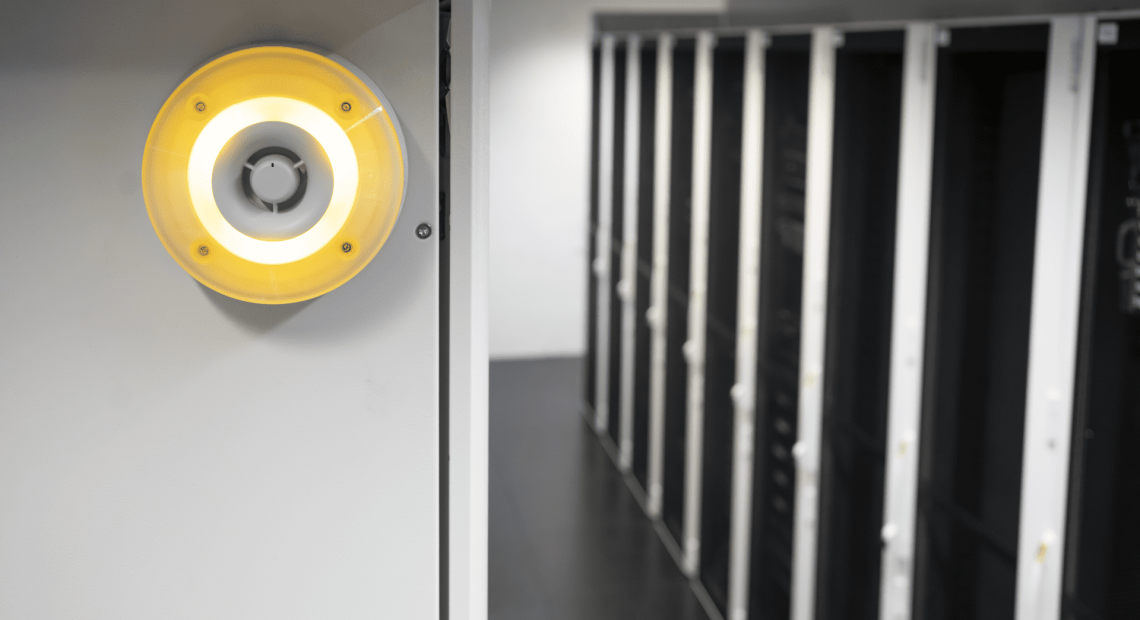
When it comes to security in data centers, cyberattacks very much dominate the headlines. But among the multiple heightening challenges caused by the AI-driven proliferation of facilities is the threat of physical security failures. Peter Dempsey from Axis explains how data center growth is transforming security needs
By: Editorial, a&s Middle East
E-mail: editorial@asmideast.com
It has been estimated, for example, that one in 10 malicious breaches result from such incidents, potentially costing millions in damages and downtime as criminals, vandals, and activists steal and sabotage equipment and operations. Aside from malicious attacks, growth in operations increases the risk of equipment failures, hidden defects, and hazards such as fires as rack density rises, further compounded by the reduced presence of human security patrols as data centers become more automated over time. The size of the issue is only set to grow as data center activity accelerates and transforms, amid the rise of both edge data centers and large hyperscale facilities.
Scale Challenge

Peter Dempsey, Key Account Manager and Data Centre Lead for the EMEA region at Axis Communications
“Over the past five years, hyperscale data centers have typically ranged from 30 to 60MW per building, but now they’re building and talking about hundreds-of-megawatt and even gigawatt buildings and campuses,” says Peter Dempsey, Key Account Manager and Data Centre Lead for the EMEA region at Axis Communications. “The scale of these facilities is off the charts, and data centers are also moving to the edge, bringing new physical security challenges.” Like multiple other areas of data centers, the need to accelerate the provision of physical security is a double-edged sword. On the one hand, it poses a challenge to rapidly build the watertight systems needed for larger-scale, more distributed facilities. On the other hand, it ramps up the pace of innovation to keep up with demand.
Multi-Layered Approach
Among the trends he highlights in this area is the need for cameras to do more through analytics and AI at the edge, while monitoring a wider area. “There’s a shift towards more intelligent analytics for security, with Axis pushing both hardware and platform innovation,” says Dempsey. “We’re seeing a lot more convergence between the physical and IT world. That opens up many more opportunities, even though there are also more challenges and risks associated with it.”
Axis pursues what it calls a “multi-layered” approach to physical security, with comprehensive services for all areas of a data centre that enable the provision of a holistic overview and also allow premises to be monitored with fewer human patrols. The company identifies five basic layers, starting with the facility’s perimeter, followed by the area inside the main gate, access areas and systems, individual server rooms, and, finally, the server rack. “When we talk about the security landscape, we go all the way from the perimeter to the rack,” says Dempsey. “We’re originally associated with being a camera manufacturer, whereas we’re actually an end-to-end security supplier.” He adds that providing services and analytics at all different scales is in line with players in the data center industry increasingly seeking lifecycle management options, wanting to know multiple types of information on assets across their lifespans.
“Over the past five years, hyperscale data centers have typically ranged from 30 to 60MW per building, but now they’re building and talking about hundreds-of-megawatt and even gigawatt buildings and campuses,”
Peter Dempsey, Key Account Manager and Data Centre Lead for the EMEA region at Axis Communications
To illustrate some of the big changes in the industry, Dempsey goes on to describe some of the innovations happening at both the first and final layers of this scale. At the perimeter, Axis is increasingly combining the use of different camera technologies to enable better tracking – including a large-scale detection and verification service purpose-built for mega-campus environments. “Traditionally, we used thermal-based camera technology for the perimeter, but we’ve more recently been incorporating our thermal solutions with radar and optical solutions,” says Dempsey. “We have three different technologies working together autonomously at the edge.”
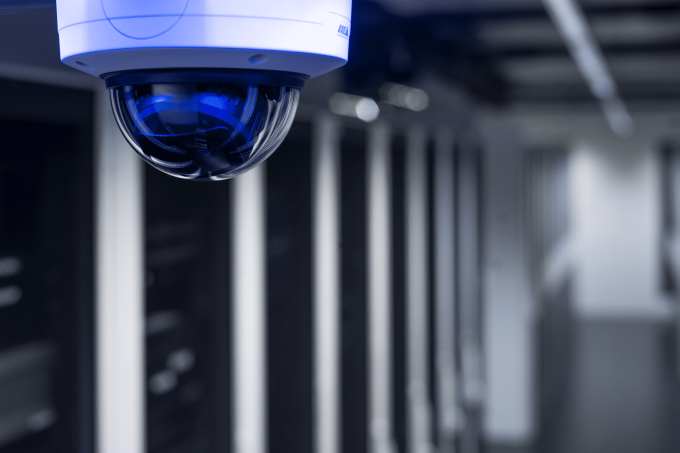
Axis pursues what it calls a “multi-layered” approach to physical security, with comprehensive services for all areas of a data centre that enable the provision of a holistic overview and also allow premises to be monitored with fewer human patrols
Working in tandem, these systems can better detect intruders and then push information back to the data center’s control center without operator intervention.
Rack Level
At the other end of the scale, Axis is getting more requests for in-rack detection products as racks grow in density to boost AI computing power, creating additional risks from factors like overheating. The company is therefore designing cameras to be put inside racks. “One of the key considerations when it comes to in-rack density is in providing proactive maintenance, identifying when the heat signature of certain electrical components or other parts inside a rack is hitting a point at which we should push out a notification,” says Dempsey. Axis is also creating sensors to perform tasks such as verifying that only employees with authorized access to racks or other equipment in the data center are actually using them, with some even requesting the deployment of facial-recognition technology for this purpose.
Meanwhile, the rapid growth of liquid-cooling systems as a more efficient alternative to air-based cooling brings additional evolving challenges to the data center. For example, there is a risk that water could pool in certain areas, potentially posing a hazard to people or damaging equipment. “More immersion and liquid-cooling systems being brought in means more liquid is coming into the data center environment,” says Dempsey. “Smart analytics running on cameras can identify if water starts to pool in a certain area and send out a command to get somebody to take action.” He adds that data center players are seeking visual verification of faults before they even reach sensors, helping to avoid issues before they become real problems – with large-scale failures not an option in the modern-day data center. “We need to make sure these systems work continuously, while giving an advance heads-up as to when some elements of a system are possibly going to fail,” says Dempsey.
Looking to the Future
With the data center industry advancing so quickly, Dempsey says one key impact is that it is necessary to forecast more rapidly to see what might come next. “Designers are looking to design buildings now around technology that they predict will come out in the next two or three years,” he says. “We’re heavily involved in that design side and the evolving challenge.” Additionally, Axis is learning through partnerships it has across the data center industry, giving it the best access to knowledge about potential upcoming trends and technologies. This includes major hyperscalers, colocation players, and designers.
“The rapid growth in the data center industry is reshaping not just capacity requirements, but the physical design and risk profile of modern data centers,” he says. “The field is continuously evolving, and the growth in need for security is exponential.”