ScreenCheck: Changing Landscape of Physical Security in the Middle East
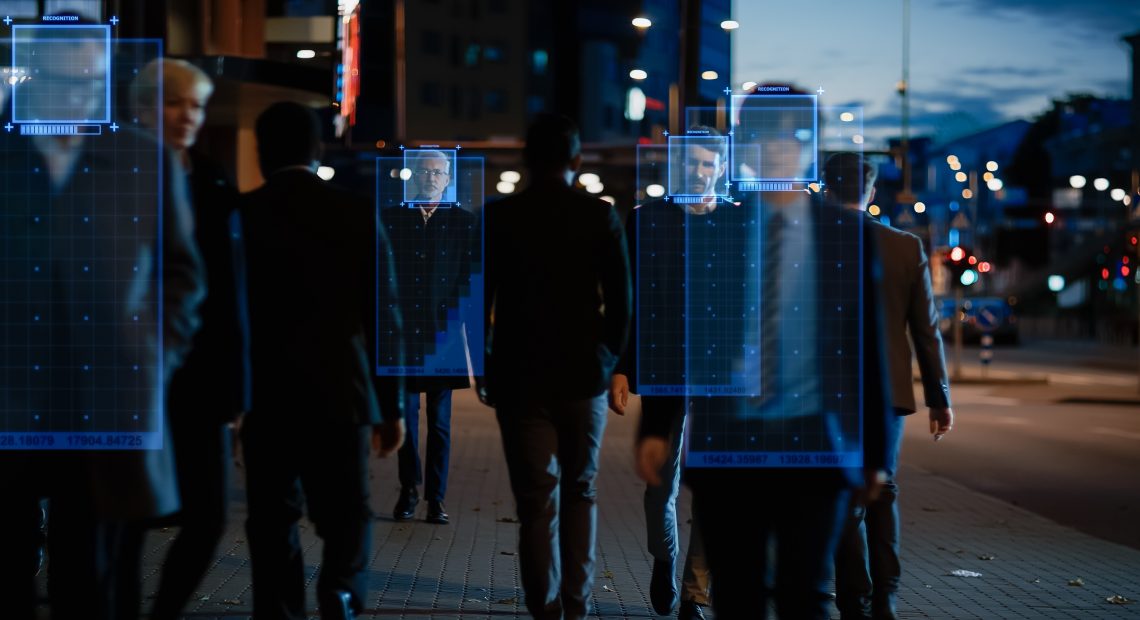
As the region builds faster than ever before, security has moved from the perimeter to the blueprint. The integrators who will define the next decade are the ones who understand the difference
By: Faisal Mohamed, CEO, ScreenCheckE-mail: faisal.mohamed@centena.com
When the doors of a new terminal open at a major Gulf airport, passengers rarely think about what it took to secure it. They do not see the months of system architecture work, the thousands of access points, or the biometric identity management layer that verifies who should be there. They experience the outcome: seamless, safe, and invisible. That is exactly the point.
Across the Middle East, physical security has undergone a transformation that goes far beyond better cameras or faster biometrics. For the region’s most ambitious infrastructure programs, from Saudi Arabia’s giga-projects to the UAE’s expanding smart city portfolio, security is no longer procured as a product category. It is designed as a strategic layer, woven into a building’s operating logic from the first blueprint.
The numbers bear this out. The Middle East and Africa physical security market is projected to exceed USD 11 billion by 2027, driven by government mandates, smart city development, and a generational wave of construction. Yet the more telling trend is not the scale of spend, it is the shift in how that spend is being directed.
From Hardware Procurement to System Intelligence
A decade ago, a large security deployment meant specifying cameras, access readers, and alarm panels from a catalogue, then handing installation to the lowest bidder. Today, that model is largely obsolete for tier-one projects. End users are asking different questions: How does my video analytics platform communicate with my access control layer? If an RFID credential is revoked at 3 am, how quickly does that change propagate across 40 entry points?
These are integration questions, not product questions. Yet many organizations still fall into a tool-first trap, investing in technology before defining what needs protecting and what risks they face. The result: controls that look impressive but do not meaningfully reduce risk. This is closely tied to a second issue: misalignment with business priorities. Not all assets carry equal value, yet many organizations still try to protect everything the same way.
ScreenCheck has operated in this space for over two decades, watching the inflection point arrive in real time. What was once a distribution model, getting the right hardware to the right integrator, has evolved into something closer to solution architecture: defining system logic before a single component is ordered.
The Integration Gap
The most persistent challenge in the regional market is not a shortage of technology. There is a shortage of expertise to make that technology work cohesively. Video surveillance, access control, RFID-based asset tracking, biometric authentication, and alarm management are all mature disciplines in isolation. The difficulty lies in getting them to function as a unified intelligence layer rather than a collection of parallel systems generating siloed data.
This gap is most visible in retrofit projects, where organizations attempt to layer modern analytics onto infrastructure never built for integration. It also appears in greenfield developments, where ambitious designs often exceed the implementation capabilities of local teams.
A related pitfall is mistaking compliance for security. Frameworks such as ISO or NIST provide a useful baseline, but passing an audit and operating securely are not the same thing. It is entirely possible to satisfy a compliance checklist while meaningful gaps remain in how systems actually perform under real operating conditions.
ScreenCheck’s model addresses this directly. By working upstream with consultants and system integrators well before procurement decisions are made, the company helps define architecture that is achievable, not just impressive on paper. The focus is on what the system needs to do operationally and building backwards from that requirement to the right combination of technologies.
That means asking hard questions about lifecycle: not just whether a biometric access control system works on day one, but whether the integrator deploying it has the training to manage firmware updates, credential database migrations, and hardware refresh cycles over a multi-year contract.
The Skills Equation
No assessment of the regional security landscape is complete without acknowledging the talent gap. AI-driven video analytics, network-based identity management, and cloud-integrated access control are all areas where regional expertise is still maturing. The rapid pace of project delivery compounds this: integrators are frequently asked to deploy technologies they have limited experience with, on timelines that leave little room for on-the-job learning.
“The projects we are involved in today are defined by complexity, not volume. A client is asking us to help design a system that will still be performing at full capacity ten years from now. That requires a completely different conversation at the design stage, and it requires partners who can be accountable across the entire lifecycle.”
Faisal Mohamed, CEO, ScreenCheck
The consequences are not always immediately visible. A poorly integrated biometric system may appear functional at handover but degrade under real-world load. An access control network with inadequate segmentation may reveal vulnerabilities only during an audit. There is also a tendency to over-index on technology while underestimating human and process risk, where weak governance and inconsistent access policies can undermine even advanced platforms.
This is where ScreenCheck’s training and ongoing support offering has become increasingly significant. Building technical capability across the integrator community is a commercial necessity for a market being asked to deliver at unprecedented scale and sophistication.
What the Market Expects Now
The conversation in regional procurement circles has shifted. Decision-makers are looking beyond specifications and price points, asking instead about long-term performance, vendor accountability, and the quality of post-installation support. The era of buying a security system and largely forgetting about it until something breaks is ending.
What organizations want now is consistency: systems that function identically across multiple sites, platforms that surface actionable intelligence rather than raw data, and partners who remain engaged beyond the installation certificate. That is a meaningful change for a market that was, not long ago, predominantly transactional.
ScreenCheck’s evolution mirrors this shift. The company has moved from product supply toward end-to-end accountability, a model that encompasses design consultation, component supply, integration support, training, and maintenance. It is a more demanding position, but one the market increasingly requires.
The Middle East is building at a scale and speed that has no real precedent in the physical security industry’s recent history. The technology to secure these environments exists. So does the ambition. The variable is execution, and execution, in a market this complex, comes down to who you trust to get it right.