Smart locks in the residential sector
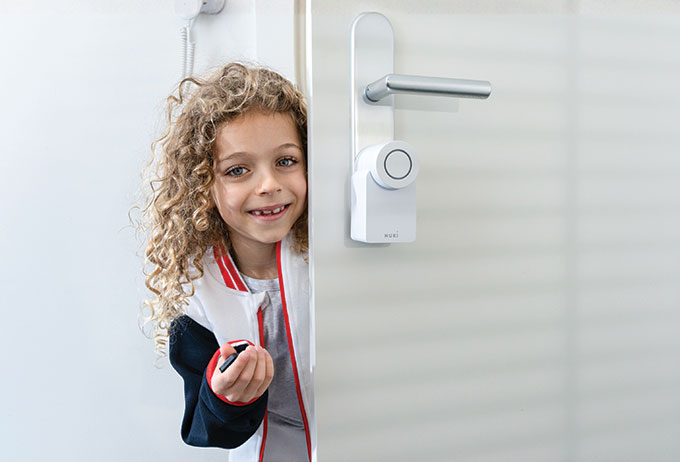
Smart locks in the residential sector have come a long way from being a practical but non-essential add-on to becoming an operational tool from which users now rightly expect a great deal. As market adoption accelerates, the focus has moved beyond convenience toward advanced control, reliability, and system-level performance.
By: Mirza Bahic; E-mail: mirza.bahic@asmideast.com
Smart locks are no longer experimental or high-tech curiosities meant to impress the neighbors. After a phase of gradual adoption shaped by trends and market skepticism, smart locks have entered a stage of structural expansion based on the quality of their functionality and proven scalability.
The numbers illustrate this clearly: the market recorded strong growth, with revenues reaching approximately $2.9 billion in 2024 and exceeding $3 billion in 2025. More importantly, residential applications account for a significant share of deployments, driven by the integration of smart locks into smart home ecosystems and new-build developments. All indicators point to the conclusion that this technology has moved beyond niche use and become a dominant segment of physical security in residential environments.
No Longer a Gadget
This global momentum is particularly visible in the EMEA region. According to Statista, the EMEA region is expected to see an additional 33.3 million smart lock units between 2026 and 2029—a trend Yale, part of the ASSA ABLOY Group, interprets as a shift away from perceiving smart locks as optional “gadgets” toward their gradual acceptance as standard components of residential infrastructure.
This growth paints a picture that extends beyond merely recording an increase in demand. It signals a change in the philosophy of access control in residential environments. Smart locks are increasingly embedded in smart home ecosystems, replacing physical keys with digital authentication and enabling remote management. All of this is supported by access that is individualized for each user and can be monitored in real time. In practical terms, access is no longer defined by the lock as a physical device, but by identity, permissions, and connectivity.
Although global, this transformation is not uniform. In Europe, expansion is shaped by retrofit needs, with around 18 million installations in 2024, 60% of which are in residential buildings. An ageing housing stock, energy efficiency requirements, and fragmented infrastructure define both the pace and complexity of implementation.
In contrast, the Middle East and Africa account for more than three million installations and are characterized by greenfield construction, luxury residential projects, and state-backed developments, where smart locks are often integrated from the earliest stages.
This process has redefined the role of the smart lock within an equally smart home as the core unit of the modern residential sector. The smart lock is no longer a standalone device, but part of a broader access system that intersects with building management technologies, user experience, and operational efficiency.
Part of Operational Infrastructure
The transition to smart locks is no longer driven solely by convenience. It is increasingly based on the perception that this technology represents an operational necessity in residential environments, although awareness levels still vary.
In single-family homes, smart locks remain closely associated with convenience, particularly through eliminating physical keys and simplifying access for multiple users. As Juan Ashida, SVP & Head of Residential Segment EMEIA at ASSA ABLOY, explains, “Single-family homes currently represent the largest and most commercially significant segment for smart lock adoption in EMEIA… While convenience is the primary driver of adoption, security benefits increasingly reinforce long-term usage and trust.”
This shift is even more pronounced in multi-dwelling and managed residential environments, where smart locks move beyond convenience and become infrastructure. Agnieszka Filipowicz, Business Development Manager for Central and Eastern Europe at Salto Systems, notes that “smart locks have clearly transitioned into operational infrastructure in multi-dwelling environments such as build-to-rent developments, co-living spaces, student housing, and serviced apartments.”
Here, the focus shifts from individual devices to system-level efficiency. Remote tenant onboarding, keyless entry and exit, and integration with property management systems reduce administrative burden. At the same time, access logs increase accountability in shared environments.
The same applies to contractors and service personnel. In managed buildings, access rights must be assigned, monitored, and revoked without physical key exchange. Technologies such as Salto Virtual Network (SVN) and BLUEnet enable remote updates across large portfolios, reducing dependence on mechanical systems.
A similar approach is visible in advanced projects in the Middle East. Karam Hamadeh, Managing Director of Technical Product Solutions (TPS), states that “the smart lock is no longer a feature in the brochure; it is part of the building’s operational infrastructure.”
Short-term rental operators provide a clear example. Credential-based access has become standard, not only for convenience but for generating audit trails that are critical in incident investigation and legal contexts. Access thus becomes a continuous process involving credential issuance, activity tracking, and the elimination of cumbersome logistics associated with physical keys.
At the individual level, this also changes risk management. Martin Pansy, co-founder and CEO of Nuki Home Solutions, explains that “losing a mechanical key necessitates a costly and time-consuming replacement of the entire cylinder… losing a smartphone… allows the user to simply withdraw the digital access permission instantly and generate a new one.”
ROI Measured in Efficiency, Not Price
As the role of smart locks evolves, so does their economic logic. Return on investment is no longer defined by initial cost, but by long-term operational efficiency as they reduce ongoing maintenance costs, improve tenant satisfaction, and simplify property management processes.
In new-build projects, the case is straightforward. Integration during the design phase reduces installation complexity and enables standardization across units. Ashida also highlights home offices as a specific use case for smart locks in single-family homes. These are households in which several people need reliable and flexible access at different times, making digital credential management a practical, rather than merely theoretical, advantage.
Beyond direct savings, the integration of smart locks can strengthen the perceived value of a property and its market differentiation. Concrete gains can come through higher sale prices or rental income in competitive residential markets. “In new-build projects, the economic case is straightforward,” says Hamadeh.
In managed residential environments, financial benefits accumulate through reduced key management costs, faster tenant onboarding, and a lower need for cylinder replacement. In the case of retrofits, the calculation becomes more complex. Existing doors and integration challenges increase both costs and implementation time.
“Retrofit is a different calculation,” Hamadeh notes. “The hardware cost is similar, but integration complexity increases — particularly in older buildings where frames, wiring, or intercom systems may require modification.” Still, long-term value remains even in such buildings. In private and short-term rental spaces, savings can be achieved quickly through a reduced need for locksmith interventions, while remote access and automation improve usability and control.
Real-world deployment confirms this. Nuki Home Solutions reports more than 600,000 smart locks in use and over two billion locking operations annually, indicating not just adoption but continuous reliance on the technology.
Rapid Return on Investment
“Return on investment is often realized almost immediately,” says Pansy. Part of this value lies in everyday risk management. Losing a mechanical key usually requires replacing the entire cylinder, while digital credentials can be revoked and reissued instantly. Francisco Javier Boter Vidal, European Product Marketing Manager for Security at ZKTeco, says that “smart locks are becoming increasingly economically justified in both apartments and houses, particularly where enhanced security and convenience can reduce insurance premiums and operational costs.”
The new-build segment is also undergoing profound changes in the way smart access control systems are delivered. One example is Nuki’s Smart Module solution, in which digital access is integrated almost invisibly into the door itself, without visible components and without the need for battery replacement, as the module is permanently powered.
Mobile Access as the Desired Standard
The smartphone has moved from optional to primary access tool in many residential environments. “Mobile access, using a smartphone as a key, has increasingly become a standard expectation in the mid to high-end residential segment,” explains Ashida.
However, adoption is uneven. “Concerns about battery failure, device loss, or distrust of the technology are real and should not be dismissed,” says Hamadeh. Resistance is stronger among older users, in households, and in environments with less developed digital infrastructure.
Technical barriers persist. “At the infrastructure level, legacy intercom and access control ecosystems in older buildings create integration friction that slows adoption. The technology is ready; the installed base is not always,” Hamadeh states. Reliability of connectivity and interoperability between platforms also remain limiting factors.
Hybrid models are emerging as a practical solution. “Interestingly, many users prefer a hybrid access model rather than relying on mobile access alone,” says Ashida. In practice, the hybrid model usually combines access via phone, physical keys, and keypad entry as three types of credentials for different user profiles and situations within the same household.
Agnieszka Filipowicz points to integration with Apple Wallet as a way to reduce resistance, combining BLE and NFC technologies within a familiar and trusted environment and making the transition from physical keys to smart locks easier.
The Key Will Become a Nostalgic Relic
Solutions from Salto Systems extend mobile access to wearable devices, enabling the use of smartwatches and similar devices alongside smartphones. This is an important detail that further expands the range of credentials and prevents reliance on the phone as the sole access device.
Biometric authentication is also part of the picture, including fingerprint and facial recognition. It is gaining particular traction in the higher-end and more technologically advanced segment of the smart lock market. ZKTeco, for example, is focusing on the development of palm vein recognition and related technologies.
However, Francisco Javier Boter Vidal notes that in Europe, the barriers are often less technological and more regulatory in nature. ZKTeco and similar manufacturers are already prepared for the large-scale deployment of advanced biometric solutions, but what is lacking is adequate and harmonized regulation to support this in practice.
“Advancements in biometrics and AI will drive innovation, making smart locks even more secure and user-friendly,” he says. This could also mean that the focus of technological development will shift toward reducing interaction with the lock itself. Technologies such as Ultra-Wideband (UWB) enable proximity-based authentication, where the system recognizes the user’s arrival and automatically unlocks the door.
“The physical key will become a nostalgic relic,” says Martin Pansy, adding that the future lies in access being authenticated seamlessly and in the background.
Why Users Still Hesitate
Despite rapid adoption, limitations in the wider deployment of smart locks remain a reality in the field. “Power dependency remains the most significant operational vulnerability,” Hamadeh points out. This is particularly pronounced in extreme climate conditions. In the GCC region, where summer temperatures regularly reach very high levels, battery failure moves from a potential inconvenience to a real operational risk. This makes backup provisions and careful hardware selection a key step in every implementation. Battery failure, ambient conditions, and system errors can disrupt smart lock access if they are not accompanied by appropriate safety mechanisms. In response, modern systems offer certain risk-mitigation measures. In smart locks, these include low-battery alerts and built-in fail-safe mechanisms. To further reduce operational risk, these technologies have become standard in more advanced platforms.
Cybersecurity is another persistent issue. As connected devices, smart locks are exposed to risks linked to cloud services and network vulnerabilities. There are also user concerns around privacy protection, which continue to affect the pace of this technology’s deployment in the residential sector.
“Customer hesitations are completely understandable: After all, it’s about access to a particularly sensitive place – your own home,” Pansy notes. The cybersecurity discussion is significant enough to be addressed frequently at major industry trade fairs. This shows that these questions are not limited to consumers, but also concern manufacturers seeking to offer answers in different ways.
Some solutions respond to these challenges through design. Systems installed on the inside of the door reduce physical exposure, while other smart locks support operation without mandatory cloud connectivity. This limits data sharing and strengthens control in the hands of users.
Nuki also relies on this approach. With its solutions, a user account is not required, data is not automatically stored on servers, and the lock can also operate via Bluetooth, without the need for cloud or Wi-Fi connectivity. Encryption is based on a challenge-response mechanism comparable to online banking standards, while each device undergoes independent laboratory testing. At the same time, installation on the inside of the door means that the lock is invisible and inaccessible from the outside, without affecting the existing level of security.
Acceptance of the technology in mixed residential buildings also requires active management beyond the technology itself. “Technology alone does not drive adoption — onboarding, training, and support are essential,” says Hamadeh. This is particularly important in buildings occupied by user profiles with different levels of digital literacy. Smart lock networks operating within fragmented ecosystems also face problems, as these ecosystems limit seamless compatibility between platforms and systems inside the building.
Agnieszka Filipowicz also points to credential lifecycle management as a technical challenge that is often overlooked in the wider deployment of smart locks in the residential sector. The goal is not only to ensure that access rights are issued, updated, and revoked securely, but also that this can be done at sufficient scale across different devices and user profiles without creating parallel security gaps.
Finally, security progress in the world of smart locks is currently expected in three concrete areas. These are enhanced encryption protocols, secure elements built into hardware, and more robust identity management frameworks.
Integration as the End Goal
If there is one direction in the development of smart locks that has the potential to bring everything together, it is certainly integration. “Smart locks will increasingly operate as nodes within a broader building intelligence layer,” Hamadeh explains. This vision also extends to adaptive access policies. This means that systems will respond to user behavior and risk context instead of operating according to fixed rules. For even better results, they will also be connected to visitor management systems and BMS platforms.
“Platforms such as SALTO Homelok will continue to evolve, offering deeper integration with property management, smart home, and building management systems via APIs,” adds Agnieszka Filipowicz.
In the Middle East, this trend is already moving beyond individual buildings. Large-scale mixed-use projects and smart city concepts are being developed from the ground up, creating an opportunity to embed intelligent access into city infrastructure itself. This degree of integration has already been considered and planned in the region for some time.
Smart locks are becoming part of interconnected systems that extend across residential environments. They can serve as triggers for coordinated responses involving lighting, climate control, and security systems, resulting in residential spaces that respond more quickly to changes in real-world conditions.
However, integration remains incomplete. Fragmentation of technologies and inconsistent standards still limit the development of fully unified residential environments.
According to Hamadeh, all these trends clearly describe the end goal: the convergence of mobile, biometric, and card-based access into a single interoperable platform. Leading manufacturers are already working at this level, while wider adoption in the residential sector is the inevitable next step.
Proof Through Use
The development of smart locks has a clearly defined direction, but their success will not depend exclusively on technology. As with other integrated systems in buildings, intelligence in access management must prove itself through measurable results. This primarily refers to reliability, usability, security, and integration.
User behavior data supports this direction and sends encouraging signals when it comes to smart locks in the residential sector. Once users experience smart access, they rarely return to physical keys. The difference in perceived convenience between the two technologies remains decisive, but the key question is how quickly that boundary will be crossed in the case of smart locks.
Another factor gaining importance is education and raising user awareness, which is often an overlooked component of the next phase of smart lock technology adoption. Instead of focusing on the availability of the devices themselves, the speed of the transition toward this technology in the residential sector will be determined by understanding the benefits and practical uses of smart locks.
Ultimately, smart locks will not replace traditional systems only through the new functions they offer. They will do so by showing that they can manage access more efficiently in increasingly complex residential environments, while maintaining the delicate balance between convenience and control, and between innovation and trust