Mercury launches S4 modules for access control expansion
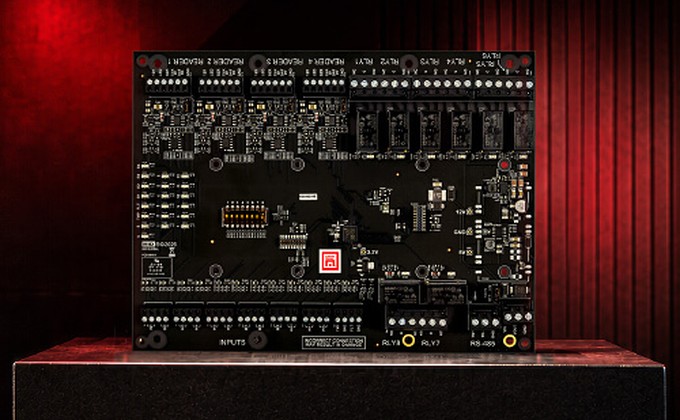
Mercury Security has launched a new family of S4 I/O Modules designed to expand access control capacity while allowing organizations to retain existing infrastructure and strengthen cybersecurity.
The HID-owned access control hardware manufacturer introduced the Mercury S4 I/O Module family. The platform targets organizations that need to modernize or expand physical access control systems without replacing existing panels and associated infrastructure.
One of the main additions is the MR54-S4 Reader Interface Module, which provides four-door capacity in the physical space previously required for a two-door module. It supports up to 12 inputs and eight readers, allowing integrators to increase system capacity without adding additional panels or taking up more space in equipment rooms.
The MR54-S4 doubles door capacity within the footprint previously used for a two-door interface module.
Mercury has also placed cybersecurity at the center of the S4 design. The modules support secure boot to prevent unauthorized firmware from running, hardware-based key protection through an EAL6+ Secure Access Module and capability for post-quantum cryptography. Mercury says the architecture is designed to support alignment with frameworks including NIST and CIS and emerging Cyber Resilience Act requirements.
Protecting existing access control investments
The S4 family is built on Mercury’s open architecture and supports both forward and backward compatibility. This allows organizations to introduce new capabilities incrementally rather than replacing complete access control installations.
For large deployments covering hundreds or thousands of doors, the approach can reduce panel replacement, rewiring and technician visits. This makes investment protection particularly relevant for security operators and integrators managing long-life infrastructure.
The new generation also provides six times the memory and eight times the storage of previous Mercury modules. Mercury says more than eight million of its controllers are currently installed worldwide.