Six Ways Digital Access Reduces Costs for Businesses
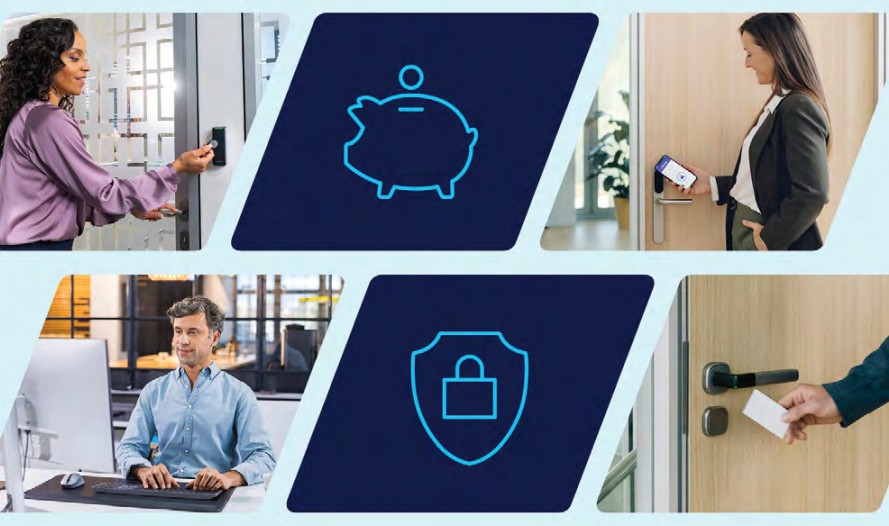
Digital access delivers measurable value across key areas—from lower installation and operating costs to greater flexibility, stronger security, and a reduced total cost of ownership. By replacing manual processes with intelligent access management, organizations can now improve operational efficiency
By: Thomas Schulz, Director & Head of Marketing DAS EMEIA, ASSA ABLOY Opening Solutions EMEIA
E-mail: thomas.schulz@assaabloy.com
For almost any business, digitalizing access, with the latest electronic and electromechanical locking solutions and systems, has become an effective way to implement sustainable cost reductions. It provides a concrete return on investment (ROI) over the long haul. Getting the right solution in place represents a long-term investment in the health of a business’ cost base.
Hybrid working, increased on-site deployment of contractors, workspace reconfigurations, and evolving security challenges are no longer exceptions; they are everyday realities in businesses across the Middle East. To meet these growing demands, even in times of budget limitations, access management must remain flexible, secure, and future ready.
“Switching to digital access is not about adding complexity or cost,” explains David Moser, SVP & Head of Digital Access Solutions at ASSA ABLOY Opening Solutions EMEIA. “It is about preventing unnecessary expenditure, strengthening security, and ensuring access management can keep pace.” In at least six ways, access digitalization marries increased security and safety with long-term cost savings.
“Switching to digital access is not about adding complexity or cost. It is about preventing unnecessary expenditure, strengthening security, and ensuring access management can keep pace.”
– David Moser, SVP, ASSA ABLOY Opening Solutions EMEIA
Eliminate Hidden Costs and Risks
With traditional mechanical access, every lost key, access update, or organizational shift triggers manual workload and additional costs. Digital access replaces physical interventions with software-based control, including remotely. Lost credentials can be blocked instantly: this saving represents one of the most tangible cost-efficiency improvements over a digital system’s lifetime. Of course, at the same time, limiting the risk of lost credentials remaining in circulation also boosts site security. By supporting workflows and not just access, digitalization reduces recurring costs while boosting operational agility. It is a win–win for costs and safety.
Save Budget With Lower Installation Costs
Digital access solutions do not usually need extensive wiring or disruptive construction work. Often devices are battery-powered, and so don’t need cabling, or they generate their own operating energy. A faster, low-footprint installation translates into reduced need for specialist contractors like electricians and minimal disruption. This directly lowers project costs.
Reduce Operational Admin Workload
Digital access enables faster issuing, amending, and revoking of access rights, which reduces workload for security or facilities teams and lowers ongoing labor costs without compromising control. Digital access devices and systems can also integrate with complementary digital products such as time-and-attendance or visitor management. By linking access events with workforce and visitor presence, organizations reduce duplicate data entry work, minimize errors, and streamline everyday administration.
Deter Security Threats to Prevent Costly Incidents
Traceability and visibility are part of the digital access DNA. Audit trails and access insights help reduce internal incidents, support investigations, and limit the financial impact of breaches. Higher security also has cost-reduction implications. For example, according to IBM, the average cost of each data leak – from cyber, physical, or hybrid cyber-physical security breach – is USD 4.4 million. Still further efficiency gains are achievable when digital access is integrated with complementary systems such as CCTV or intruder detection. Correlating access events with video or alarm data helps security teams to respond faster, investigate more efficiently, and avoid prolonged disruption.
Stay Flexible to Minimize Reinvestment Needs
With a wireless digital access solution, office moves and refurbishments may be handled through reconfiguration rather than construction. It is often possible to move a wireless access device from door to door, for example, saving time and money. Existing systems can be extended by adding and seamlessly integrating devices at new openings, instead of starting again from scratch. In these and other ways, digital access can adapt without new hardware or infrastructure, helping organizations to avoid the duplication of security investment as their needs evolve.
Future-Proof Security to Reduce TCO
When budgets are under pressure, long term value performance matters more than short-term saving. Over the medium term, digital access significantly reduces total cost of ownership (TCO) by lowering installation, in-use, and change related costs. This can include the harnessing of technologies such as energy harvesting to reduce costs in a sustainable manner. Access digitalization enables organizations to invest once, remain flexible, and be ready for what comes next.
“Careful management of financial resources is not a barrier to access digitalization and workflow innovation,” adds David Moser. “ASSA ABLOY ensures organizations identify the right solution for them, whether a new access system or the addition of connected devices to increase the reach and power of an existing system.”