Dubai and Abu Dhabi Lead MENA as Gulf Cities Dominate IMD Smart City Index 2026
The latest IMD Smart City Index shows the Gulf widening its lead in digitally enabled urban governance, with Dubai and Abu Dhabi ranking in the global top 10, Saudi Arabia placing eight cities in the index, and non-Gulf Arab cities trailing far behind.
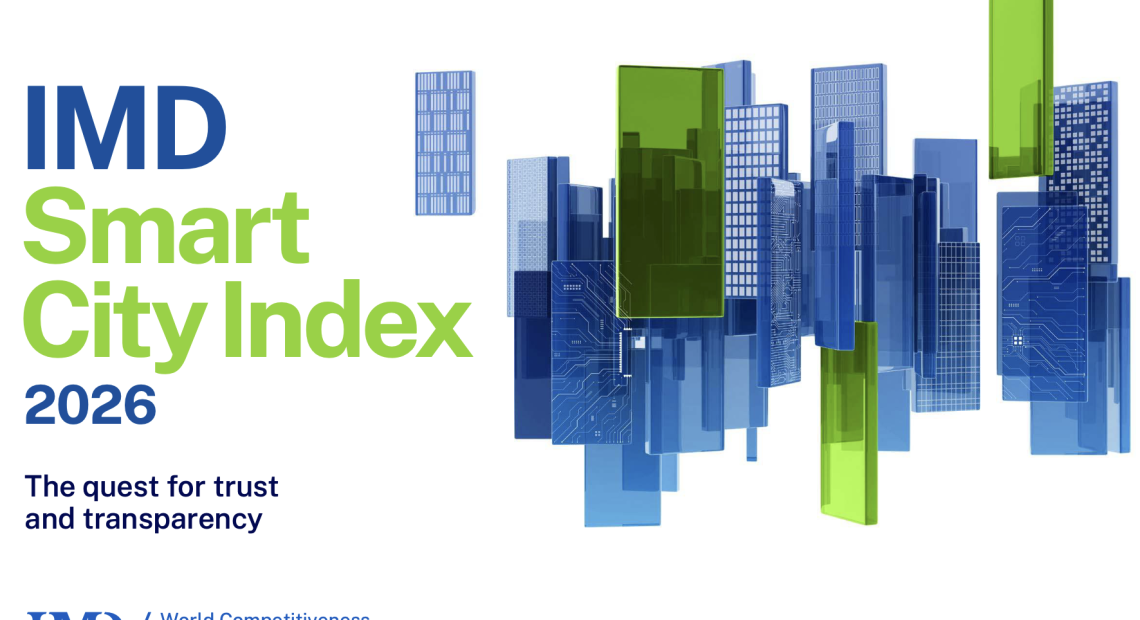
Dubai and Abu Dhabi have emerged as the highest-ranked cities in the Middle East and North Africa in the IMD Smart City Index 2026, taking sixth and 10th place globally, respectively, out of 148 cities assessed. The index, published by IMD’s World Competitiveness Center, measures how residents experience urban technology, infrastructure, governance and quality of life, and relies heavily on survey feedback rather than on technology deployment alone.
Riyadh climbed to 24th globally, while Hail entered the ranking at 33rd and became one of the region’s strongest first-time performers. Makkah ranked 50th, Al Khobar 64th, Madinah 67th, Jeddah 55th, AlUla 85th and Hafr Al-Batin 100th.
The UAE’s performance stands out not only because both cities made the global top 10, but also because they are the only MENA cities to do so. Dubai and Abu Dhabi were each rated A across both the report’s Structures and Technology pillars, underscoring the extent to which digital services, public trust and institutional capacity are now reinforcing one another in the country’s smart-city model.
Saudi Arabia, however, delivered the broadest regional showing. Riyadh climbed to 24th globally, while Hail entered the ranking at 33rd and became one of the region’s strongest first-time performers. Makkah ranked 50th, Al Khobar 64th, Madinah 67th, Jeddah 55th, AlUla 85th and Hafr Al-Batin 100th. AlUla posted one of the sharpest gains in the wider region, rising from 112th to 85th, which points to the impact of sustained investment in urban development and tourism infrastructure.
Qatar and Bahrain remained visible but outside the Gulf’s top tier. Doha ranked 34th globally, placing it behind the UAE’s two leading cities and Riyadh, while Manama stood at 53rd and recorded one of the steepest declines among Gulf cities this year. The results suggest that while both cities remain credible smart-city players, the competitive pace in the Gulf is increasingly being set by the UAE and Saudi Arabia.
Outside the Gulf, the picture is far weaker. Rabat led the North African contingent at 124th globally, followed closely by Cairo at 125th and Algiers at 128th. Amman ranked 130th, while Beirut and Tunis fell to 145th and 146th, respectively. In Africa more broadly, IMD’s 2026 table included nine cities, none of them in the global top 100, with Rabat, Cairo, Algiers and Tunis representing North Africa.
What makes this year’s report especially relevant for MENA is its core conclusion: strong institutions and public trust matter more than technology spending alone. IMD says the 2026 edition assessed 148 cities and found that Structures scores are a better predictor of overall performance than Technology scores by themselves. That finding helps explain why Gulf cities, especially in the UAE and Saudi Arabia, are advancing faster than many peers. Their gains are being driven not just by apps, sensors and connectivity, but by the ability to turn digital investment into services residents actually trust and use.
For the region’s smart-city and security sectors, the ranking also carries a broader message. As MENA governments invest in AI, digital identity, connected mobility and integrated urban management, the cities climbing fastest are those pairing technology with effective governance and service delivery. In that sense, the 2026 index is not simply a scoreboard for digital ambition. It is a reminder that in MENA, as elsewhere, the smartest cities are increasingly the ones that can make innovation feel reliable, useful and human-centered.
For the entire report, click here.