Hytera unifies AFAD emergency radio network in Istanbul

Istanbul’s disaster management authority has deployed a unified Hytera DMR network designed to improve communications and coordination between emergency response units across the city.
Istanbul’s Disaster and Emergency Management Department (AFAD) has deployed a Hytera DMR Tier III Simulcast Trunking Solution to replace fragmented communications infrastructure and improve interoperability between emergency services, according to a Hytera case study. The project, implemented during 2025 and 2026, includes 30 DMR base stations providing extensive coverage across Istanbul.
A key objective was to connect AFAD’s existing analog, DMR, military-band and HF communications systems from different vendors into a single resilient and interoperable network, while making more efficient use of the limited radio-frequency spectrum available to the authority. The deployment also allows AFAD to retain and integrate much of its existing communications infrastructure rather than replacing it entirely.
AFAD had previously relied on aging conventional radio infrastructure and multiple independent networks operated by different departments. These included analog systems using Motorola and Aselsan radios, conventional DMR networks, a Selex radio network operating on a military band and an HF air-band system using ICOM equipment.
According to Hytera, the deployment represents the first successful implementation of a DMR trunking simulcast system in Istanbul.
Simulcast technology allows multiple base stations to transmit simultaneously using the same frequency and modulation. Precise coordination prevents interference, enabling the infrastructure to operate as a single large network while allowing users to move between coverage areas without changing channels or radio settings.
Unified dispatch across emergency services
Hytera’s HyTalk Pro platform and SmartOne Dispatch system provide interoperability and centralized voice dispatch across the different communications environments.
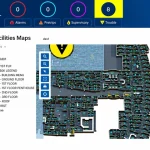
The architecture can connect professional mobile radio systems – including digital, analog, conventional and trunked networks – with public mobile networks, traditional telephone systems and IP-based VoIP communications. Dispatchers also gain map-based visualization and real-time GPS location information to support the coordination of personnel and resources during incidents.
From a systems integration and procurement perspective, one of the project’s key advantages is that AFAD can continue using existing multi-vendor equipment alongside the new infrastructure. This enables the authority to modernize its communications network while continuing to extract value from previous investments in radios and communications systems.
The DMR network also improves the use of Istanbul AFAD’s limited radio-frequency resources. By deploying simulcast technology across 30 base stations, the system can provide broad city coverage without requiring separate frequencies for each site.
The unified infrastructure is designed to improve coordination between firefighting, medical, police and other emergency response units during disasters and critical incidents, while providing AFAD with more stable communications, wider coverage and centralized dispatch capabilities.