Interview: Gaurav Mahajan, Sales Director Middle East and Africa, ICT
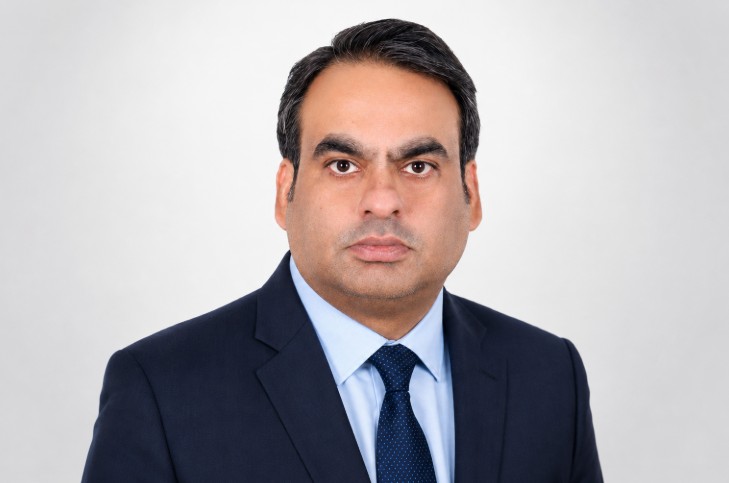
Access control has become one of the most strategic technology decisions a business can make. As buildings grow smarter and security expectations rise, manufacturers are being asked to deliver far more than a door opening system. To understand how this shift is playing out across the Middle East and Africa, we sat down with Gaurav Mahajan, Sales Director Middle East and Africa at ICT, to talk about the trends reshaping the industry and where the biggest opportunities lie ahead
By: Damir Muharemovic E-mail: editorial@asmideast.com
a&s Middle East: You’ve spent over two decades in the security industry, twenty of them here in the Middle East. What has it been like building ICT’s presence in the region over the past two and a half years?
Mahajan: I have been working in the security industry for more than twenty-five years, twenty of which I have spent based in Dubai and covering the whole Middle East region. I started my career with the systems integrator G4S in India before relocating to the UAE with the company. From there, I moved to the manufacturer side of the industry, beginning with Bosch’s Access Control Division, followed by Pelco, one of the market leaders in video surveillance, and then OPTEX, a specialist in intrusion detection and perimeter protection. Building on that experience across physical and electronic security, I joined ICT at the end of 2024 to establish the company’s office for the Middle East and Africa region.
Since then, we have opened a physical office in Dubai Silicon Oasis and obtained a trade license, giving ICT a genuine local presence rather than a fly-in operation. We have built out our distribution channels across the Middle East and Africa through partnerships with leading players such as Ingram Micro, Mobius MEA and ScreenCheck, and we have expanded our partner base by bringing on new system integrators to support growth in each country we operate in. Alongside this, we have raised our market visibility and knowledge through participation in major security events such as Intersec Saudi Arabia and Intersec Dubai, distribution partners’ roadshows and technology partner events. Our focus has been on educating the partners and end-users on our scalable, customizable end-to-end solutions, and working closely with our partners to deliver a successful solution to the end-users.
a&s Middle East: You’ve watched the access control industry evolve for more than twenty years now. How has it changed over the last decade, and which trends do you see as most important today?
Mahajan: Access control has changed enormously over the past twenty years. While the basic architecture of the technology remains familiar, the industry has been transformed across several core pillars.
The first is the rise of unified security platforms. Rather than operating as a standalone mechanism, access control today is frequently unified with video surveillance, building management systems and intrusion detection into a single dashboard, giving operators one point of control instead of several disconnected systems.
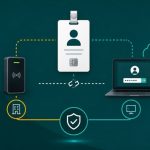
The second is the rapid rise of mobile credentials. Physical badges and easily cloneable 125kHz proximity cards are being replaced at pace by smartphones and smartwatches, with users relying on Bluetooth Low Energy or Near Field Communication for seamless, contactless entry.
The third is the growing role of AI and biometrics. Modern systems now use advanced algorithms for facial authentication and fingerprint scanning, increasingly paired with AI-driven analytics that can identify entry patterns and flag tailgating before it becomes a security incident.
Finally, there is deeper IT and IoT integration. Today’s access control systems connect directly with HR platforms such as Active Directory and with building automation systems covering HVAC and lighting, shifting access control from a purely protective measure into a broader driver of operational intelligence across the whole building.
From Two People to a Full Regional Team
a&s Middle East: ICT has expanded significantly in recent years, both globally and across the EMEA region. How has the company strengthened its presence in the Middle East?
Mahajan: ICT has over twenty years of experience delivering unified security solutions, trades in more than fifty countries, and has over thirty thousand installations worldwide. While ICT may still be considered a mid-sized company by scale, it has grown substantially over the last four years, doubling its turnover, and has made the operational and organizational changes needed to support that growth internationally. In EMEA specifically, our team has grown from two people handling sales and pre-sales to a full regional team covering operations, customer service, sales, pre-sales and post-sales support. Our Dubai office now provides sales and technical support across the entire MENA region.
a&s Middle East: What differentiates ICT from other manufacturers in the unified security market?
Mahajan: Our installation and distribution partners see us as a reliable, customer-centric manufacturer that excels when a project calls for a unified, open, flexible and customizable platform. Our size and culture mean we can make decisions quickly, so our customers experience flexibility and responsiveness rather than the slower pace that can come with larger organizations.
Our enterprise platform, Protege GX, was designed and built as a unified platform from day one. Access control, intrusion detection, alarms, areas, outputs, automation logic, events and integrations all sit within a single system concept. That gives ICT a very clear position in the market, particularly for projects where customers expect more than basic door control and want to improve both security and operational efficiency at the same time.
a&s Middle East: Which vertical markets are delivering the best results for ICT?
Mahajan: Our Protege GX enterprise platform is designed to be scalable, open and customizable, so it can meet end-users’ requirements regardless of sector. The only real limits we encounter are country-specific standards and certifications; in terms of applications, there is no vertical that ICT cannot address. We are active in commercial buildings, government facilities, healthcare, education, military environments, smart city projects, manufacturing, energy, banking and other demanding sectors. The greatest value is usually delivered on projects where access control, intrusion detection, automation and third-party integrations need to work together as a single operational environment. That holds true for new installations, but also for sites running legacy or sometimes obsolete access control systems that need to migrate to a newer, feature-rich and cybersecure platform while keeping part of the old system running during transition. ICT offers many migration paths to support exactly that kind of projects.
Looking specifically at the MENA market, we have had success across many verticals with installations that have been running reliably for several years. We have deployed an integrated solution for a major university spanning fifteen campuses, where Protege serves as a single platform for access control alongside integrations such as CCTV, video management, fire, ANPR and time and attendance. We have installed our Protege GX solution in several military hospitals here in the GCC region, and we have delivered access control solutions for two prestigious airports in Africa. Our enterprise access control solution is also deployed across several data centers in the region, and beyond that we have installations in commercial buildings, prisons, royal palaces, military sites, government facilities and other critical infrastructure. In short, we have success stories in every market vertical we serve.
The common thread in all these deployments is a requirement for an open platform, scalability, and easy integration with third-party systems, whether that is HR, lift control, booking, visitor management, operational systems or other security platforms. These are exactly the types of projects where ICT’s technology and support excel, because Protege GX is built on an open structure that integrates with third-party hardware and software, offers a SOAP API for third-party integrations, and already has a long list of existing integrations available out of the box.
Protege GX platform was designed and built as a unified platform from day one. That gives ICT a very clear position in the market, particularly for projects where customers want to improve both security and operational efficiency at the same time.
a&s Middle East: To what extent have today’s requirements around data protection and secure communication changed the way access control systems are designed and implemented?
Mahajan: Security systems now operate on LAN and WAN infrastructures, exchange data with IT systems, and often integrate with identity management, cloud services, building platforms and OT environments. That means they have to be designed as secure networked systems from the outset, which makes cybersecurity essential rather than optional. Encryption, authentication, secure communication, user rights management, software updates and data protection are now baseline requirements, and manufacturers need to continuously improve their products in line with evolving regulations and cyber risks.
When access control and intrusion detection sit within one integrated platform, the stakes are naturally higher, because that system is managing users, areas, alarms, events, automation and third-party integrations all at once. That makes secure architecture and lifecycle management critical. At ICT, we treat cybersecurity as an ongoing priority, from product design and compliance with key standards such as ISO 27001:2022 through to constant staff training. That said, effective protection is a shared responsibility: it also depends on installation companies and end-users keeping firmware updated, maintaining network compliance and ensuring their own staff are well trained.
a&s Middle East: Looking specifically at the MENA region, where do you see the biggest business opportunities for ICT?
Mahajan: The biggest opportunities for us lie with customers looking for bespoke solutions where access control serves as the backbone of their operational workflow, not just a security measure. Another key factor in our success is when end-users want a clear CAPEX structure for their investment and want to avoid high recurring costs. We see this approach across sectors, but it’s especially common in education, healthcare and government buildings, where investment is planned over the long term with a clear amortization plan in mind. Our solution is built on long-lasting hardware combined with a one-off licensing model, which makes the total cost of ownership very clear and predictable for end-users from the outset. Across the wider MENA region, we have also identified specific countries where our partner network positions us particularly well to grow the business further.