ASSA ABLOY: Ten Years of Rapid Change in Digital Access

The latest edition of ASSA ABLOY’s long-running Wireless Access Control Report shows a maturing market where digital and mobile solutions are becoming the norm. Alongside continuing trends such as wireless adoption, sustainability, and cloud services, the focus for many now turns to increasingly intelligent integrations and to demonstrating ROI to cement access control’s role in a new generation of smart, secure, and efficient buildings.
By: Thomas Schulz, Director & Head of Marketing DAS EMEIA, ASSA ABLOY Opening Solutions EMEIA
Security professionals are entering an era of convergence – not only between physical and digital systems, but also between disciplines and objectives. Organizations that lead in access control will be those that view it not only as a security tool, but as an enabler of transformation. Integration of digital access management with other systems is critical to the holistic smart building.
Wireless Access Becomes Mainstream
One expected finding from the new Report is that wireless access solutions are now mainstream. Adoption has climbed steadily, from 39% in 2023 to 42% in 2025, according to data from a survey carried out exclusively for the 2025 report. These solutions are now integral to modern access management strategies and workflows. According to ASSA ABLOY, this is the first time in over a decade of researching and publishing its report that wireless (fully or partially) systems have overtaken wired systems among those who manage access digitally.
Wireless access systems provide the flexibility needed for managing everything from schools, hospitals, and manufacturing plants to mixed-use buildings, multi-residential housing, and agile workspaces. Adopters cite reduced wiring, easier retrofits, and integration-readiness as just a few of the advantages. Wireless is also foundational to mobile-first environments, making it easier to support touchless entry, remote management, and real-time control.
This is the first time in over a decade of researching and publishing ASSA ABLOY’s report that wireless (either fully or partly) systems have overtaken wired systems among those who manage access digitally
Why do organizations continue to digitalize access management? The single most important factor, according to ASSA ABLOY’s data, is convenience. When employees, contractors, and temporary visitors can come and go with ease, operations for building and security managers are made more efficient, including in terms of costs. Digitalizing access provides a concrete ROI – something that, from a strategic perspective, may be turned into a competitive advantage.

“We are delighted to offer our biennial look into the ongoing digitalization of access, which is also becoming a wireless-first technology,” says Richard Sharp, VP & Head of Product Unit Wireless Locks, DAS at ASSA ABLOY Opening Solutions EMEIA. “Now running for more than a decade, our report highlights ways for security departments and consultants to contribute to their overall business. It also helps non-specialist decision-makers to stay on top of what’s happening right now in access – and more importantly, to see what’s ahead.”
Specification Focus: Mobile and Biometric Access
Mobile digital access is no longer a novelty. Increasingly, it is an expectation. Adoption has boomed, as widely forecasted. Fully mobile credential environments now account for 17% of all survey respondents, more than triple the rate of 2023’s report. For some organizations, mobile is still not a fit. Think, for example, of specific healthcare environments, pharmaceutical premises, or food preparation businesses. Yet respondents who rule out mobile continue to shrink from edition to edition: just 19% of survey respondents now reject altogether the idea of going mobile, down from 31% in 2023.

“Where our 2023 report captured strong momentum towards mobile access, the 2025 edition finds increasing market maturity,” adds Sharp. “As many organizations modernize their security infrastructure, digital access systems are becoming standard, with a clear shift to mobile credentials. Our own digital offering includes several widely adopted mobile solutions, including the Openowä mobile app for SMARTair wireless locks, CLIQ and eCLIQ Connect for mobile workforces, and the new ABLOY CUMULUS mobile key platform.”
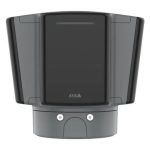
Biometric access is also emerging as a serious, scalable option – not just for sensitive facilities, but increasingly for general commercial settings, especially with the launch of powerful solutions at accessible price-points, like the iDFace reader from Control iD*. Survey data showed that a vast majority of professionals (91%) now view biometrics as a practical access and authentication technology, with more than half of respondents (58%) already using it to some extent.
Key Procurement Driver: Sustainability
According to the International Energy Agency (IEA), buildings consume approximately 30% of global energy. The 2025 ASSA ABLOY Report confirms suggestions that, increasingly, end-users and security professionals value the concrete ways in which digital access can help to reduce unnecessary energy use.

For many respondents to the survey, sustainability has gone beyond ‘merely’ a consideration: for 27% of respondents, it is the top factor when considering investments to enhance access management reach or capability. “Sustainability was also a major factor in the design and specification of our own new HQ, DubaiOne,” explains Sharp.
“For many organizations, across multiple and diverse sectors, sustainability is moving from a supporting role to a strategic driver,” he adds. “Wireless systems, which reduce the need for cabling and complex infrastructure, are often seen as a ‘greener’ alternative. Battery-powered and energy-harvesting devices generally consume much less energy than equivalent wired locks. We also see fast-growing demand for green building solutions and documentation, such as Environmental Performance Declarations (EPDs), which also count towards several green certification schemes we support, including BREEAM, LEED, WELL, and others.”