How the Gulf Security Market Is Adapting Under Pressure

As regional uncertainty persists, Gulf security operators are responding not with reactive procurement but with deliberate investment in integrated platforms, AI-driven analytics, and operational resilience, building systems designed to perform under pressure, not just respond to it.
By: Roman Ivanković; E-mail: editorial@asmideast.com
The Gulf security market has long been built on a simple premise: continuity is not a luxury, but a requirement. In a region where critical infrastructure, large-scale economic activity, and ambitious national development programs run in parallel, any disruption carries consequences that extend well beyond its immediate source. Both governments and operators know this, and technology providers have built their entire value proposition around it.
This understanding has shaped the market for years. It also explains why the current environment has not produced the kind of volatility one might expect. The foundations were designed to absorb pressure. So far, they are holding.
Recent developments, which influenced both regional uncertainty and shifted global conditions, have not upset the market’s fundamental logic. Quite on the contrary. Rather than triggering reactive procurement or abrupt strategic shifts, the response across the Gulf has been measured and deliberate. Organizations are recalibrating, not retreating. They are reinforcing what works, addressing gaps where they exist, and directing investment toward long-term solutions, rather than focusing on short-term fixes.
Precision Over Expansion
What makes this moment particularly significant is the convergence of several forces reshaping security operations at the same time. The shift from standalone systems to integrated platforms is well underway. Artificial intelligence is moving from the edges of security infrastructure toward its operational core. Procurement decisions are becoming even more strategic, and the people who manage these systems are being equipped with tools that extend their capabilities without replacing their judgment.
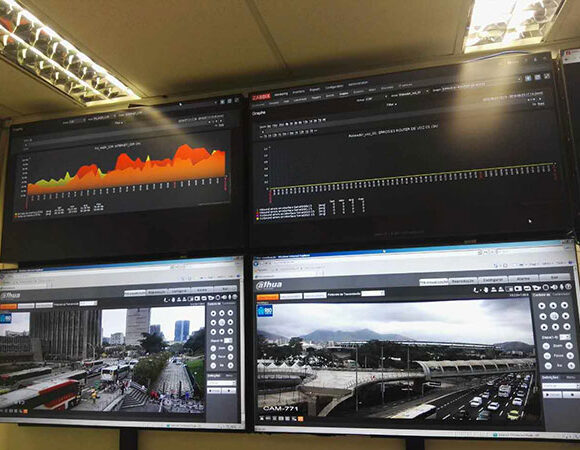
Unified dashboards, automated alerts, and centralized command and control platforms are becoming standard expectations, particularly in sectors where the cost of failure is high and the margin for error is narrow.
Across supply chains, workforce management, and technology investment, the same pattern keeps emerging. Stability is being maintained not through expansion or overreaction, but through greater precision and tighter control. The Gulf is not a market defined by crisis response. It is one that has made resilience a standard operating principle. The months ahead are expected to deepen that commitment even further.
Gulf Markets Build Security Around Continuity
Recent developments in the region have not triggered a surge in demand, but rather reinforced and refined existing priorities in the security market across the Gulf region. Governments and organizations continue to treat security as a foundational requirement, with a consistent focus on protecting critical infrastructure while ensuring operational continuity. Gulf states continue to prioritize uninterrupted economic activity even during periods of heightened regional tension, driving a growing need for comprehensive security, safety, and consistent operations. In that sense, demand is not reactive, but anchored in long-term strategic planning.
“Across the market, we are observing a measured but steady demand for advanced security and safety solutions – particularly those that enhance operational continuity, real-time visibility, and protection of critical assets. There is also a growing emphasis on technical advisory, system audits, and optimization of existing infrastructure, reflecting a more mature and forward-looking industry,” underlined Norma Bitar, Managing Director of AlignTech International.
This stability is important, as it indicates that organizations are not responding to regional developments with urgency-driven procurement. Instead, they are reinforcing existing systems and investing in capabilities that support resilience over time. Bitar explained that the GCC overall continues to position itself as a benchmark for secure, well-regulated, and resilient markets, balancing immediate operational needs with long-term strategic development.
At the same time, there is a clear qualitative shift in how demand is structured. Organizations are moving away from standalone technologies toward integrated systems. Across the Gulf, organizations are showing stronger interest in solutions that can improve visibility, coordination, and response across facilities, rather than relying on standalone systems.
“At ScreenCheck, we are seeing growing relevance for integrated platforms that combine access control, video analytics, alarm management, visitor management, and connected monitoring into one operational framework. Procurement discussions are becoming more strategic, with clients placing greater focus on interoperability, faster incident response, scalability, and long-term operational value,” noted Shaji Abdul Kader, Chief Operating Officer of ScreenCheck.
He also pointed out that the strongest momentum is expected to come from sectors where continuity and asset protection are especially important, including critical infrastructure, logistics, transport, healthcare, education, and large campuses. Procurement processes themselves are becoming more strategic, with buyers placing greater emphasis on interoperability, scalability, and value, rather than focusing solely on technical specifications – particularly evident in sectors such as energy, transport, and logistics.
Focus on Maintaining Normal Economic Activity
This translates into strong demand for technologies that strengthen early threat detection, secure communication channels, enable surveillance, and protect critical infrastructure – all aimed at allowing organizations to operate with confidence despite an unpredictable regional environment.
“Across sectors such as energy, transportation, logistics, and public safety, we are observing a renewed focus on resilience and preparedness. Organizations are not necessarily reacting with panic-driven procurement, but rather with more structured investment in integrated security ecosystems that support long-term operational continuity,” underlined Loubna Tabbara, Marketing and Sales Director at Tabbara Electronics.
At a broader level, the regional focus remains on maintaining normal economic activity despite external uncertainty. Organizations are prioritizing resilience and preparedness while ensuring that operations continue without disruption – reinforcing the view that demand is not expanding impulsively, but evolving in line with more mature and structured operational requirements.
Suppliers Embrace Proactive Risk Management
From an operational standpoint, the Gulf security market continues to function with a high degree of stability. There is no evidence of systemic disruption across supply chains, logistics, or delivery timelines, despite the ongoing situation in the Middle East. However, what has changed is the level of attention and control applied to these processes.
Organizations are approaching supply chain management with increased caution, not because of immediate breakdowns, but due to a recognition of potential variability in global logistics conditions. For ScreenCheck, the top priority is to stay ahead of the disruption. That means maintaining close coordination with global partners, planning inventory carefully, keeping communication transparent with customers, and building buffers where needed.
Other suppliers also confirm that delivery schedules remain largely unaffected. Deliveries are continuing on schedule, and distributors report minimal disruption. AlignTech International has implemented a set of protective measures to ensure stable operations – optimizing routing options, maintaining flexibility in delivery planning, and strengthening coordination with logistics partners to absorb any variability in global supply conditions.
A parallel approach can be seen in inventory strategies. Rather than reacting to disruptions as they occur, some organizations are deliberately maintaining local stock levels to absorb short-term fluctuations. This strategy, combined with close coordination with manufacturing partners, allows companies such as Tabbara Electronics to provide stability and reliability even when global logistics conditions are evolving.
The operational environment can be described as stable but more actively managed. The system is not under strain, but it is being monitored and adjusted with greater precision. This reflects a broader shift toward proactive risk management, where continuity is ensured not by reacting to disruption but by anticipating and mitigating it in advance.
Trained Teams with Smarter Tools
Across the Gulf, organizations are not facing widespread challenges in maintaining trained security personnel or ensuring operational continuity. Security operations continue to function normally, supported by stable institutional environments and well-established frameworks for safety and coordination.
“While there may be minor, localized challenges in deploying specialized personnel, these are effectively managed through flexible staffing, cross-training, and close coordination with service partners. At the same time, increased adoption of remote monitoring and centralized systems is helping reduce reliance on physical presence while maintaining high security standards,” explained Norma Bitar.
Suppliers deem that operations are underpinned by strong safety frameworks, well-established contingency planning, and a high level of confidence in the region’s security environment, which have been key in ensuring continuity. The system is structurally resilient, with sufficient capacity to maintain performance even during periods of uncertainty. This ensures that operational coverage remains consistent without requiring large-scale structural changes.
“Security teams feel safe and supported in performing their roles, which allows organizations to maintain a high level of preparedness even during periods of regional uncertainty. At the same time, many organizations continue to invest in technologies that enhance the effectiveness of their security teams. Integrated command and control platforms, advanced video analytics, and secure communications systems allow operators to monitor large environments more efficiently and coordinate responses when needed,” said Loubna Tabbara.
There is also a noticeable shift in how organizations approach workforce readiness. Rather than focusing solely on staffing levels, there is greater emphasis on training continuity, preparedness, and the ability to maintain performance under varying conditions.
“Many organizations are looking more closely at technology that can support personnel on the ground, for example, unified monitoring, automated alerts, centralized dashboards, and systems that reduce manual effort while improving situational awareness. In our view, operational continuity is strongest when trained teams are supported by well-integrated technology that helps them act faster, coordinate better, and maintain consistency under pressure. This is partly an inference from recent operational-readiness guidance and from the wider industry focus on crisis leadership and control-room performance,” underlined Shaji Abdul Kader.
The key dynamic is not workforce shortage, but workforce optimization. Organizations are ensuring continuity by combining stable staffing structures with enhanced technological support, creating systems that are both resilient and adaptable.
Unpredictable Freight Costs
While shipment delays are not currently a concern, cost volatility is emerging as a variable worth monitoring. Shaji Abdul Kader noted that freight charges remain highly unpredictable given the current environment. However, he pointed out that this has not slowed things down – on the contrary, security projects such as biometrics, surveillance, and life safety accelerate the decision-making and distribution process.
Operational Intelligence: Combining AI and Human Expertise
What is shifting now is not just the preference for integrated systems – that trend is well established – but the role that artificial intelligence is beginning to play within them.
AI-driven analytics are moving from the periphery to the core of security operations, enabling platforms to do more than connect data streams: they can interpret them, flag anomalies, predict patterns, and support faster decision-making with minimal human intervention.
This matters because the scale and complexity of modern security environments have outpaced what traditional monitoring approaches can effectively handle. Human operators, however well-trained, face inherent limitations when managing large volumes of simultaneous data inputs. AI addresses this gap not by replacing personnel, but by filtering noise, prioritizing alerts, and ensuring that attention is directed where it is needed most.
For organizations across the Gulf, this represents a meaningful upgrade in operational intelligence. The focus is no longer on simply having visibility, but on making that visibility actionable, automated, and in real time. Systems that once required significant manual oversight are becoming increasingly self-correcting, capable of adapting to changing conditions without waiting for human instruction.
The practical implications extend beyond security operations themselves. When AI is embedded into broader operational frameworks, it contributes to efficiency gains across facilities management, access control, and incident response. This reinforces the case for security investment not just as a protective measure, but as an operational asset.
Gravitating Toward Connected Ecosystems
This direction is clearly visible in procurement conversations happening across the region. According to ScreenCheck, organizations are gravitating toward connected ecosystems that offer a single operational view – consolidating events, identities, movements, and alerts into one coherent picture. The emphasis is on solutions that are interoperable and scalable, rather than feature-rich but fragmented. In safety-critical environments in particular, the appetite for smarter monitoring, automated anomaly detection, and faster verification is growing – precisely because these capabilities reduce operational complexity rather than adding to it.
Equally significant is the shift in how organizations are approaching technology investment. There is a trend of integrating new capabilities into existing infrastructure while preserving what already works. This reflects a growing maturity in the market, where procurement decisions are driven by long-term operational logic rather than the appeal of novelty.
“There is a noticeable shift toward system optimization, upgrades of existing infrastructure, and intelligent automation, rather than complete system overhauls. This is especially relevant in sectors such as energy, utilities, transportation, and large-scale developments, where uninterrupted operations are essential. Overall, the trend is not just about adopting new technologies, but about investing in scalable, interoperable, and regulation-compliant solutions that can adapt to evolving operational and geopolitical requirements,” said Norma Bitar.
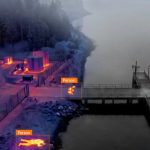
The practical applications are becoming more concrete. AI-based monitoring is expanding beyond perimeter security into daily operations: tracking compliance, flagging anomalies early, and automating routine checks that would otherwise require continuous human attention. In high-risk environments such as industrial facilities and critical infrastructure sites, this means safer working conditions and more consistent adherence to safety protocols.
“We continue to see strong interest in advanced video surveillance with intelligent analytics, secure mission-critical communications, perimeter protection systems, and integrated command-and-control platforms that allow operators to manage security operations from a unified environment. Another important trend is the emphasis on interoperability. Organizations increasingly prioritize solutions that integrate seamlessly with existing infrastructure, allowing multiple systems to work together and provide a comprehensive operational picture across facilities, transportation networks, and critical infrastructure,” clarified Loubna Tabbara.
More broadly, security and operational systems are no longer evaluated purely as protective infrastructure. They are increasingly seen as tools for managing complexity and extracting value from data that organizations are already generating. They are making the case for intelligent systems not just on safety grounds, but on operational ones as well.
Continuity, Resilience, and the Road Ahead
What is changing in the Gulf security market is not the direction, but the depth of commitment. Integrated platforms, AI-driven analytics, and automation are increasingly treated as essential components of operational strategy rather than optional upgrades. Organizations are moving toward full integration, recognizing that intelligent systems are a present operational requirement, not a future consideration.
Critical infrastructure, energy, transportation, and smart city development each bring specific demands, but share a common requirement: coordinated, technology-enabled security management at scale. Public safety agencies and law enforcement authorities are expected to continue modernizing along the same lines, with the emphasis on connecting and equipping existing resources rather than simply expanding them.
What this points to is a market that has quietly crossed a threshold. Security technology is no longer evaluated primarily as a protective measure — it is assessed as operational infrastructure, held to the same standards of reliability, integration, and return on investment as any other core system. That shift in how organizations think about security is arguably more significant than any individual procurement trend.
The question facing organizations is not whether to invest, but how to invest in ways that deliver lasting value — through smarter integration, stronger partnerships, and systems that can adapt as needs evolve. The Gulf has never been a market that responds well to disruption. What it has built instead is something more durable: a culture of continuity, backed by the technology and the institutional will to sustain it.