Interview: Integration of People, Data, and Operations Is a Core of Modern Security Management
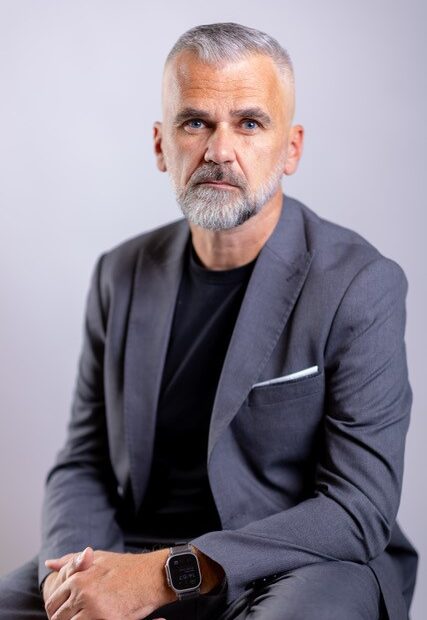
Interview: Josip Filipović, CRIO, Aldra Alameen Security Services
We built what we call an operational intelligence framework. It’s both a philosophy and a digital architecture. Every piece of information enters one secure environment. From there, it feeds analytical dashboards accessible to management. The key is that people and data don’t compete, they cooperate. Technology supports professionals, not the other way around.
By: Damir Muharemovic
a&s Middle East: The position of Chief Resources and Information Officer remains uncommon in the private security sector. What does the CRIO role represent in practice?
Filipović: Security today is a system of systems. You can’t protect a client or a facility effectively if your own organization is fragmented, meaning that if human resources, operations, and information technology all speak different languages. The CRIO role at Aldra exists to prevent that disintegration. It connects the human side of the business, our people, their skills, their readiness, with the informational backbone that drives every decision.
At Aldra Alameen, the CRIO position sits at the intersection of technology and leadership. My team ensures that the information generated on the ground: incident and regular reports, movement logs, training data, risk analyses, etc., flows seamlessly to those who plan strategy. It’s not about managing IT for its own sake, but rather about turning raw data into usable awareness, into information. When that loop functions correctly, decision-making becomes faster, accountability becomes transparent, and our clients see the difference immediately.
a&s Middle East: How did your own background lead you to this integrative approach?
Filipović: My early career in the military and various security organizations in multiple international operations has shaped how I see information. In those environments, success depends on two things: clarity and timing. You can have the best plan in the world, but if information arrives late or incomplete, everything falls apart. That lesson never leaves you.
When I transitioned to the corporate side, I noticed that many private-sector companies still suffered from delayed communication and isolated departments. So I started enhancing bridges between human resources, logistics, and command centers by using digital tools guided by human discipline. Over time, that became our culture at Aldra: everyone understands that accurate reporting is not bureaucracy, it’s a form of protection.
At Aldra, everyone understands that accurate reporting is not bureaucracy, it’s a form of protection. Over time, that became our culture.
a&s Middle East: Information management has existed for decades at the managerial level across industries. What makes its integration at the operational and employee level so important today?

At Aldra, we aim to make information collection immediate and continuous throughout the day, directly from the field. Our systems are designed so that the last person in the chain, whether it’s the operator, guard, or manual technician, can enter data directly into the platform using specialized devices.
Filipović: You’re absolutely right. Information management is not new. For decades, it has been present in most organizations, especially at the managerial level: human resources, logistics, finance, and planning. What is changing now is the direction of information flow. It’s no longer enough for informatization to live only in offices or control rooms. The real breakthrough happens when we move it down to the operational level, to the people actually performing the task.
At Aldra, we aim to make information collection immediate and continuous throughout the day, directly from the field. Our systems are designed so that the last person in the chain, whether it’s the operator, guard, or manual technician, can enter data directly into the platform using specialized devices. That data might be very raw at first, but its value lies in the fact that it is already inside the system, timestamped, geolocated, and visible to the right managers. From there, it’s automatically filtered through various levels, refined, and used for decision-making almost in real time.
This approach replaces the old “hardcopy” cycle, where data was written on paper, carried back to base, typed into spreadsheets, and finally processed hours or even days later. That method wastes time at every step. Managers are making decisions on outdated information, and teams lose valuable time to bureaucratic paperwork after their shift. Our approach builds the report dynamically, as the day unfolds. By the end of the shift, management already sees what has happened, what needs attention, and where resources must move next.
Of course, this requires capable and well-trained personnel. Digital systems are only as good as the people who use them. We invest heavily in training our staff not only in operational duties but also in data discipline and digital literacy. They must understand that the information they enter is not only administrative but also operational. It directly influences logistics, readiness, and risk decisions made at the highest level.
Time Is the Most Critical Factor
a&s Middle East: How does information management change the role of leadership?
Filipović: Today, when we talk about information management, time is the most critical factor. The speed at which accurate data moves from the field to decision-makers defines the efficiency of the entire organization. That’s why informatization must start from the bottom. The role of leadership then is not to re-enter or re-create data, but to interpret, verify, and act on it. It’s a complete change of mindset. From post-event reporting to real-time management. In our industry, that immediacy can make the difference between preventing a problem and merely documenting it afterward.
a&s Middle East: In practical terms, how does Aldra integrate information and resource management?
Filipović: We built what we call an operational intelligence framework. It’s both a philosophy and a digital architecture. Every piece of information, whether it’s a training record, equipment status, or site daily and incident report, enters one secure environment. From there, it feeds analytical dashboards accessible to the management level.
For example, a project manager can instantly see staffing levels, qualifications, and readiness indicators across multiple locations on the allocated project. If one’s certification is about to expire, the system flags it automatically. If a pattern of incidents starts emerging, the analytics visualize it before it becomes a problem. The key is that people and data don’t compete, they cooperate. Technology supports professionals, not the other way around.
a&s Middle East: Many organizations claim to be data-driven. What distinguishes Aldra’s model?
Filipović: Being data-driven means little unless the data is reliable and interpreted correctly. We emphasize discipline in data. Every entry is verified and timestamped; every report follows a structured template; every access is logged. This discipline creates trust in the logged facts.
Then comes interpretation. Our analysts don’t work in isolation. They collaborate directly with operations and other relevant staff. That dialogue turns statistics into understanding. We don’t drown in data; we refine it until it supports action. Ultimately, the value of information lies not in volume but in precision.
a&s Middle East: Integration also involves people. How does information management improve human-resource performance?
Filipović: The connection is direct. Information reveals patterns that help us manage people fairly and effectively. Our internal platform tracks training history, fitness results, evaluations, and incident involvement. From that, we generate a readiness index for each individual.
Leaders can see who is prepared for more responsibility, who might need support, and where additional mentoring is required. This makes HR truly operational, so there is no longer administrative paperwork but a living system of competence management. It also supports transparency. When people know that promotions or assignments are based on verified performance data, morale improves. We’re not guessing; we’re recognizing merit.
a&s Middle East: What challenges do you see when companies attempt digital transformation in security?
Filipović: The main challenge is cultural, not technical. You can buy software, but you can’t buy discipline. Some organizations believe that a new platform will automatically solve communication or accountability issues. It never does. If reporting habits are weak or if leadership doesn’t use the data consistently, even the best system will collapse into confusion. Technology strengthens existing habits. It doesn’t create them. That’s why digital transformation always begins with people, culture, and leadership, not with coding or servers.
Another major challenge is the fear of complexity. Many professionals worry that technology will replace human judgment or make their jobs more complicated. However, when properly designed, digital tools simplify work. They eliminate unnecessary repetition, bring clarity, and guide people toward the right decisions faster. The best compliment we can receive from our teams is when someone says, “This system actually makes my job easier and saves a lot of time.” That’s when you know the system is doing its job.
And finally, transformation cannot succeed without strong leadership vision. In any organization, digitalization is not an IT upgrade. It’s a strategic shift toward transparency, reliability, and long-term efficiency. At Aldra Alameen, we are fortunate to have a CEO, Mr. Lario Lovrić, whose vision and sense of timing have been crucial in this process. He clearly saw that modern security management would soon depend on the integration of people, data, and operations into one structure. As he often says, “If information doesn’t move as fast as the operation, the operation will slow down.” That mindset set the tone for everything that followed.
a&s Middle East: You’ve mentioned “discipline” several times. How do you instill that in such a diverse workforce?
Filipović: By linking it to pride rather than punishment. People respect rules when they understand that those rules protect their colleagues and reputation. We explain the why behind every procedure. If a guard knows that accurate logs help prevent confusion during emergencies, compliance becomes natural. We also train supervisors to lead by example. When leaders submit reports on time and verify data carefully, the habit spreads. Discipline is contagious when it’s modelled and not demanded. It’s part of what we call presence-based leadership, leaders visible in practice, not just in policy.
a&s Middle East: How do you manage to keep the “human touch” when so much is digital?
Filipović: By remembering that technology serves relationships. Every digital tool we introduce is meant to strengthen communication, trust, and collaboration among people. The purpose of informatization is not to reduce human contact but to make it more meaningful.
For example, when routine reporting becomes automated, managers no longer spend their day chasing paperwork. They spend it coaching, mentoring, and engaging with their teams. When field staff can instantly report from a site or receive guidance from headquarters through a secure mobile platform, the distance between management and operations disappears. What used to take days of phone calls or emails now happens in real time. Conversation is still human, just faster, clearer, and better informed.
We also invest a lot in digital empathy, understanding what our people actually experience when using these tools. If a process feels bureaucratic or impersonal, we redesign it. The best systems are invisible: they support without distracting, they inform without overwhelming. That’s how you keep technology human-centered.
a&s Middle East: Many security companies rely on commercial off-the-shelf software for managing their operations. Why did Aldra Alameen choose to invest in developing its own customized systems instead?
Filipović: Because commercial solutions almost never reflect the real tempo or structure of field operations. Most are designed for office use or for industries with stable connectivity and predictable workflows. In security, especially when you operate across multiple continents and in complex environments, the situation is completely different. Our people work in locations where internet access is limited, conditions are harsh, and operations cannot wait for “system updates.”
Custom-built software gives us the freedom to design exactly what we need, not 80 percent of it, not a template adjusted to fit, but a complete ecosystem built around our own procedures, risk models, and command structure. We don’t have to adapt our operations to the tool; the tool adapts to us. That’s a major difference.
Another key reason is integration. In many commercial systems, you end up with isolated modules for HR, logistics, operations, and reporting that don’t communicate well with each other. We built our platform so that recruitment, training, logistics, and field operations are all connected in one flow. When a new employee completes a training module, the information immediately updates readiness records, deployment eligibility, and client compliance dashboards. It’s seamless and eliminates duplication.
Security is another decisive factor. With custom development, we have full control over where data is stored, who accesses it, and how it is encrypted. That level of data sovereignty is crucial in our industry, where confidentiality is not just a business concern but an operational necessity.
And finally, customization allows us to evolve. Our software is growing alongside the company, adapting to new project types, client requirements, and regulatory frameworks without waiting for an external vendor’s update cycle. It’s not about owning a piece of technology. It’s about owning our process and protecting our standards. For a company like Aldra Alameen, that independence is a strategic advantage, not a luxury.
Custom-built software gives us the freedom to design exactly what we need – a complete ecosystem built around our own procedures, risk models, and command structure. We don’t have to adapt our operations to the tool; the tool adapts to us.
a&s Middle East: How important is specialized equipment when operating in demanding environments?
Filipović: It’s absolutely essential. You can have the best software design, but if the hardware fails in the field, your whole system collapses. Our teams work in deserts, offshore platforms, and other challenging environments where dust, humidity, heat, and rough handling are daily realities. Ordinary commercial tablets or laptops don’t last there. That’s why we use rugged equipment designed for these conditions: tablets and handhelds with reinforced cases, sunlight-readable screens, extended battery life, and sealed ports. They can take a fall, survive rain, or operate in 55-degree heat.
This is what makes digitalization truly operational. A rugged tablet replaces entire binders of manuals and checklists, providing procedures, communication tools, and incident-reporting apps right in the hands of a user. It bridges the gap between technology and field practicality, between what’s planned at headquarters and what’s executed on the ground. When your technology survives the environment, your system survives the mission.
a&s Middle East: The security sector often deals with sensitive personal data. How do you balance operational transparency with privacy?
Filipović: Through proportionality and clear intent. We collect only the information necessary for safety and performance, nothing more. All staff are informed about what data is stored, for how long, and, most importantly, who can access it. Transparency eliminates suspicion. We also anonymize data whenever possible. For analytics, we look at aggregated trends instead of individual names. That allows us to improve operations while respecting privacy. Ultimately, ethical handling of data is not just compliance, it’s respect for the people who make the organization work.
Success Belongs to Those Who Can Connect Knowledge With Action
a&s Middle East: How do you define Aldra Alameen’s mission in this broader context of the security industry?
Filipović: Our mission is to build trust through precision. We believe that reliability is earned, not advertised. By integrating information management with disciplined resource leadership, we give clients confidence that every action is traceable, every risk is considered, and every response is accountable.
Aldra Alameen’s culture rests on three pillars: professionalism, transparency, and adaptability. Those values transcend any single industry segment. Whether protecting a corporation, a government installation, or an individual mission, the logic is the same: combine technology with ethics, data with discipline, and people with purpose. Security will always evolve, but one thing remains constant: success belongs to those who can connect knowledge with action. That’s what we strive for every day.
a&s Middle East: How has the profile of a security professional changed during your career?
Filipović: Twenty years ago, physical strength and obedience were the main criteria. Today, we look for adaptability, communication, and digital awareness. Security professionals now operate equipment, manage data, and interact with multinational clients. They must think like analysts while acting like protectors. That evolution requires new training methods. We teach not only tactics but also decision-making, ethical reasoning, and situational analysis. The goal is a professional who can respond effectively in both physical and informational dimensions of security. It’s a more demanding profile, but also a more rewarding one.
a&s Middle East: For young professionals entering the field, what skills should they focus on?
Filipović: Learn technology, but never forget judgment. Understand data, but understand people better. The best security professionals of the future will be translators between machines and humans. They’ll know how to read dashboards and also how to read a room.
I also recommend developing communication and writing skills. Reporting clearly is as important as acting quickly. A well-written incident report can save an operation days of confusion. And finally, stay curious. Technology will change, but curiosity keeps you adaptable.
a&s Middle East: Finally, what do you see as the next major transformation in the industry?
Filipović: The next transformation will be convergence. Physical security, cybersecurity, and information management will no longer be separate disciplines. They will operate through unified platforms where incidents, data, and personnel are managed in one continuum. Organizations that still separate those elements will find themselves too slow.
Artificial intelligence and automation will continue to grow, but the real revolution will be in mindset. Companies will need leaders who understand both the human and the digital terrain. That’s where the CRIO function will become standard. Every serious organization will need someone who bridges resources, information, and strategy.
The next transformation will be convergence. Physical security, cybersecurity, and information management will no longer be separate disciplines. Organizations that still separate those elements will find themselves too slow.